
How to Identify a Pure Beagle Puppy Before Buying: 10 Expert Checks (2026)

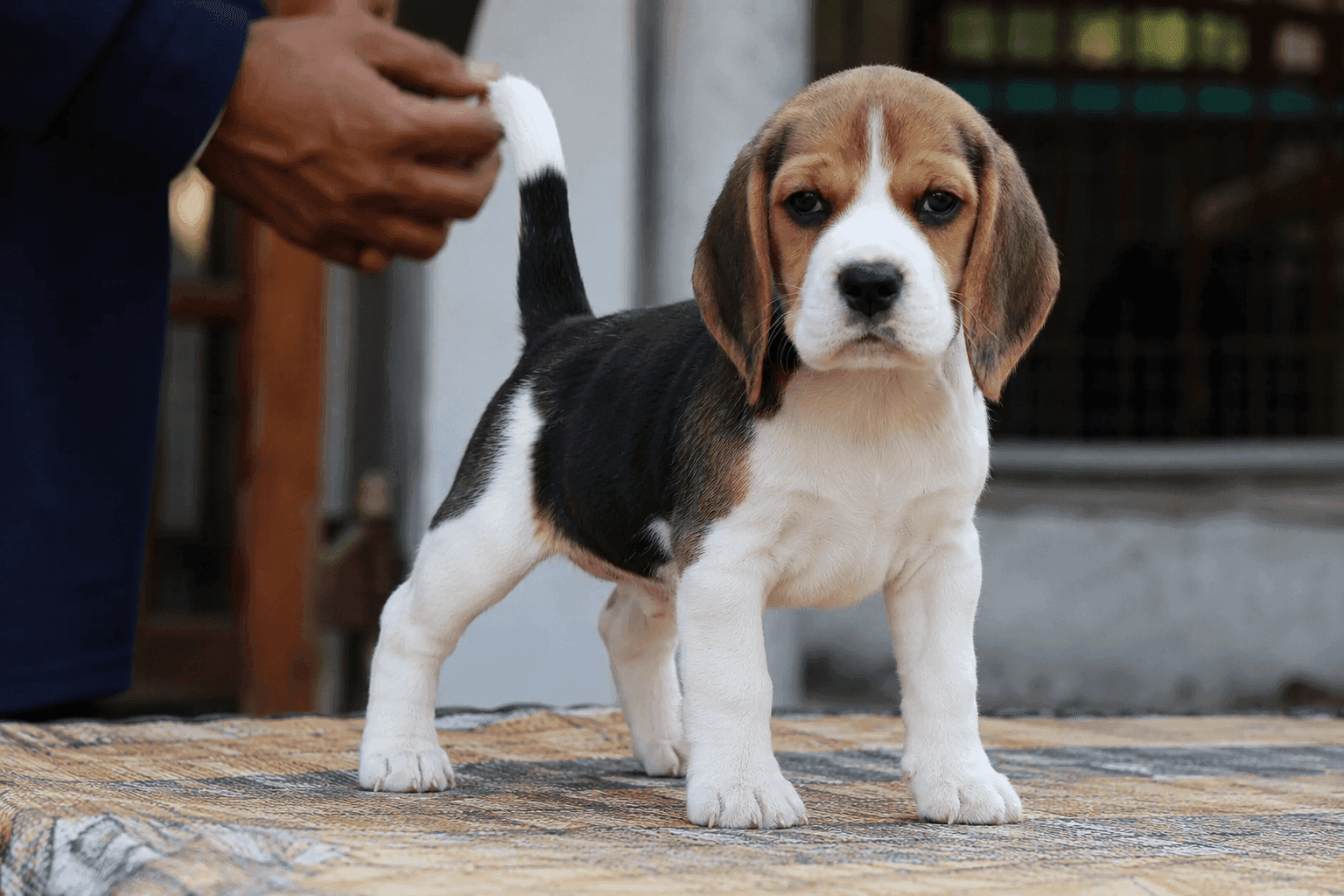
Picture this: a family spends a significant sum on what they're told is a purebred Beagle puppy, only to discover months later — usually at the vet's office — that the dog is a mixed breed with a temperament and adult size nobody expected. It's a more common story than most first-time buyers realise, and it rarely happens because someone was trying to get scammed. It happens because nobody told them exactly what to look for before they paid.
A Beagle is one of the most recognisable and best-loved breeds in India, prized for its compact size, expressive face, and famously friendly nature. But recognisability cuts both ways — because Beagles are so popular, they're also one of the breeds most frequently misrepresented by casual sellers, backyard breeders, and online listings that borrow a stock photo and a convincing story.
Knowing how to identify a pure Beagle puppy before you commit isn't about being suspicious of every seller. It's about being equipped — the same way you'd check a car's engine number before buying it, or read the fine print before signing a lease. This guide walks you through the physical traits, behavioural signs, and documentation that separate a genuine Beagle puppy from a look-alike, so you can buy with real confidence.
Quick Answer
Featured Snippet Answer A pure Beagle puppy has a broad, slightly domed skull, long low-set ears with rounded tips, a white-tipped upright tail, a compact muscular body, and a short dense coat in tri-colour, lemon-and-white, red-and-white, or tan-and-white. Genuine KCI registration papers, a documented pedigree, and access to the parent dogs are the most reliable non-physical confirmations of purity. |
Key Takeaways
Physical traits matter: head shape, ears, tail, and coat are the fastest visual checks, but none is definitive on its own
Documentation is non-negotiable: KCI registration, vaccination records, and a visible parent dog carry more weight than appearance alone
Behaviour is a signal too: a curious, social, food-motivated puppy is behaving like a typical Beagle; extreme fearfulness or aggression deserves a second look
Price is not proof: an unusually low price is more often a red flag than a bargain
The breeder matters as much as the puppy: transparency, clean living conditions, and willingness to answer questions are strong trust signals
Why Buying a Pure Beagle Puppy Matters
A Beagle's popularity comes from a fairly predictable package of traits — and that predictability only holds if the puppy is genuinely purebred.
Predictable temperament: Beagles are known to be social, curious, and pack-oriented; a mixed puppy may develop very different behavioural tendencies
Predictable adult size: purebred Beagles settle into a fairly consistent height and weight range, which matters for housing, crates, and exercise planning
Breed-specific health awareness: vets can better anticipate and screen for breed-linked conditions, such as hip dysplasia or cherry eye, in a confirmed purebred dog
Breed traits you're actually buying for: the exact reasons someone chooses a Beagle — scenthound instincts, compact size, friendliness — are only guaranteed in a genuine specimen
Training and socialization expectations: breed-typical learning styles and food motivation inform realistic training plans
Long-term cost planning: insurance, grooming, and vet care are easier to budget for when you know what you're actually raising
Family and lifestyle compatibility: a Beagle's energy level and vocal tendencies are well documented; a mixed puppy's may not be
Long-term value and peace of mind: a verifiably purebred, KCI-registered puppy retains its credibility for shows, responsible breeding, or simply your own confidence in the purchase
10 Expert Checks to Identify a Pure Beagle Puppy
No single trait proves a puppy is purebred. Genuine confidence comes from checking several of these together — physical, behavioural, and documentary.
1. Head Shape & Skull
What to observe: A broad, gently domed skull with a medium-length, square-ish muzzle and a moderate stop where the muzzle meets the forehead. The overall expression should look soft and gentle, never sharp or fox-like.
Why it matters: Head shape is one of the most breed-defining traits and is hard to fake convincingly across an entire litter.
Common buyer mistake: Assuming any floppy-eared puppy with a vaguely similar face is "basically a Beagle."
Expert Tip Compare the puppy's head side-by-side with its littermates and, if possible, the mother — consistency across the litter is a good sign. |
Watch Out For An unusually flat skull or a very narrow, pointed muzzle A head shape that looks noticeably different from the puppy's own littermates |
2. Ear Structure
What to observe: Long ears that reach close to the nose when gently pulled forward, rounded (never pointed) tips, set low on the head, hanging naturally close to the cheeks.
Why it matters: Ear length, set, and shape together are one of the clearest visual breed markers — far more reliable than "floppy vs upright" alone.
Common buyer mistake: Judging purity from floppiness alone, without checking length, set height, or tip shape.
Expert Tip Gently extend the ear forward — in a genuine Beagle it should reach at least close to the tip of the nose. |
Watch Out For Short ears that don't reach near the nose Ears set high on the skull rather than low Pointed rather than rounded tips |
3. Eyes & Nose
What to observe: Brown or hazel eyes with a warm, "pleading" expression that's often described as one of the breed's signature traits; a black nose with well-open nostrils and no discharge or crusting.
Why it matters: Eye colour and expression are subtle but genuine breed markers, and a clean, black nose is also a basic early health indicator.
Common buyer mistake: Relying on eye colour alone in a very young puppy, since puppy eye colour can shift slightly in the first few weeks before settling.
Expert Tip Look for brightness and alertness in the eyes, not just colour — a dull or cloudy appearance can flag both purity and health concerns. |
Watch Out For Discharge, cloudiness, or persistent redness around the eyes A pink or unusually light-coloured nose in an otherwise dark-coated puppy |
4. Coat Texture & Colour
What to observe: A short, dense, weatherproof coat — never silky, curly, or excessively fluffy — in one of the recognised colour combinations: tri-colour, lemon & white, red & white, or tan & white.
Why it matters: Coat texture and colour together narrow down purity quickly, since off-standard textures often point to crossbreeding with longer-coated breeds.
Common buyer mistake: Assuming any tricolour dog is automatically a Beagle — several other breeds share similar colour patterns.
Expert Tip Run a hand along the back — the coat should feel dense and slightly coarse, not soft or fluffy like a lapdog breed. |
Watch Out For Silky, wavy, or noticeably fluffy coat texture Colour combinations outside the four recognised patterns |
5. Tail
What to observe: A white-tipped tail, historically bred so hunters could spot the dog in tall grass; medium length; carried upright with a slight curve, often called a "flag tail."
Why it matters: The white tip and upright carriage are small but genuinely distinctive breed traits that are difficult to fake.
Common buyer mistake: Overlooking the tail entirely, since it's a small detail buyers often forget to check.
Expert Tip Watch the tail while the puppy is alert and moving — a Beagle typically carries it up rather than low or tucked. |
Watch Out For A tightly curled tail resting flat on the back (more typical of spitz-type breeds) No white tip at all |
6. Body Structure & Movement
What to observe: A compact, sturdy, slightly rectangular body; strong straight front legs; a level back; balanced proportions between height and length; smooth, confident, ground-covering movement.
Why it matters: Structure and gait reflect both breed conformity and basic physical health — a puppy moving oddly at a young age is worth flagging to a vet regardless of breed.
Common buyer mistake: Only checking the puppy while it's sitting or being held, never watching it walk or trot.
Expert Tip Ask to see the puppy move freely across a room — smooth, level movement without limping is a good sign on both fronts. |
Watch Out For An unusually long, lanky, or short-legged body Visible limping, stiffness, or reluctance to bear weight evenly |
7. Temperament & Behaviour
What to observe: Curious, friendly, playful, food-motivated, confident, and social with people and littermates; alert to sounds and movement.
Why it matters: Temperament is one of the main reasons families choose a Beagle in the first place, and breed-typical behaviour often shows up even in very young puppies.
Common buyer mistake: Mistaking a naturally sleepy moment (right after a nap or meal) for lethargy, or a shy first minute in a new room for a permanent personality trait.
Expert Tip Observe the puppy for at least 15–20 minutes in a calm setting — behaviour patterns settle once the initial excitement of a new person wears off. |
Watch Out For Extreme fearfulness that doesn't ease with time Unprovoked aggression toward people or littermates Persistent, unexplained lethargy |
8. Health Records & Vaccination
What to observe: A documented vaccination schedule with dates, a deworming record, a vet-issued health certificate, and any available medical history including birth weight and check-up notes.
Why it matters: These records don't confirm breed purity on their own, but they're a strong signal of a responsible breeder — and they matter for the puppy's health regardless.
Common buyer mistake: Accepting a verbal assurance ("yes, all vaccinated") without asking to see the actual card or certificate.
Expert Tip Cross-check the vaccination dates against the puppy's age — a responsible breeder's schedule should follow WSAVA-aligned vaccination guidelines rather than being rushed or backdated. |
Watch Out For No physical vaccination card, only a verbal claim Vaccination dates that don't match the puppy's stated age |
9. KCI Papers, Pedigree & Parent Dogs
What to observe: Genuine Kennel Club of India registration papers, a documented pedigree showing parent (and ideally grandparent) lineage, and — critically — the ability to see at least the mother in person or on a live video call.
Why it matters: KCI registration and visible parentage are the strongest non-physical confirmations of purity, since they document lineage rather than relying on appearance alone.
Common buyer mistake: Accepting a photocopy or screenshot of "KCI papers" without verifying details, or accepting photos of parent dogs instead of a live look.
Expert Tip Ask to see the parent's registration number and cross-reference it, and treat a breeder's reluctance to show the mother as a bigger red flag than almost anything else. |
Watch Out For Registration papers the breeder won't let you examine closely A breeder who refuses to show the mother, even on video call |
10. Breeder Transparency & Veterinary Examination
What to observe: A breeder willing to show you the puppy's living conditions, answer detailed questions without hesitation, provide a genuine health guarantee, and support an independent vet examination before final payment.
Why it matters: The breeder is ultimately your biggest safeguard — even a genuinely purebred puppy raised in poor conditions can carry health and socialisation problems that documentation alone won't reveal.
Common buyer mistake: Skipping an independent vet check because the seller "already showed a health certificate."
Expert Tip Whenever possible, have your own vet examine the puppy — or at minimum review its records — before finalising payment, not after. |
Watch Out For A seller who pressures immediate payment before you can arrange a vet visit Refusal to let you see where the puppies are actually kept |
Pure Beagle vs Mixed Beagle Puppy: A Quick Comparison
This side-by-side comparison is a starting reference, not a diagnostic tool — a genuine vet examination and documentation review remain the most reliable confirmation.
| Trait | Pure Beagle Puppy | Likely Mixed Beagle |
|---|---|---|
| Head | Broad, domed skull; medium muzzle | Narrow, pointed, or flat skull |
| Ears | Long, low-set, rounded tips | Short, high-set, or pointed |
| Tail | White tip, upright, slight curve | No white tip, tightly curled or low-set |
| Coat | Short, dense, weatherproof | Silky, wavy, or unusually fluffy |
| Colour | Tri-colour, lemon/red/tan & white | Off-standard or unrecognised patterns |
| Body | Compact, balanced, sturdy legs | Noticeably long, lanky, or short-legged |
| Temperament | Social, curious, food-motivated | Unpredictable; may vary widely |
| Documentation | KCI papers, visible pedigree | Missing, vague, or unverifiable |
| Parents | Mother visible, often both parents | Parents unseen or "unavailable" |
| Price pattern | Consistent with quality category and lineage | Unusually low for the claimed pedigree |
Myth vs Fact
| Myth | Fact |
|---|---|
| Any tricolour dog with floppy ears is a Beagle. | Several breeds share similar colouring; ear length, head shape, and tail together are needed to confirm. |
| A KCI certificate photo is enough proof. | Papers should be examined closely and, where possible, verified — photocopies and screenshots are easy to misrepresent. |
| A cheaper puppy is simply a better deal. | Ethical breeding, health checks, and documentation cost money; an unusually low price is more often a red flag. |
| Eye colour alone confirms a purebred puppy. | Puppy eye colour can shift in the first few weeks, so it should never be the only check relied on. |
| If the seller seems nice, the puppy is probably fine. | A friendly seller and a verifiable, documented puppy are two separate things — check both. |
Common Scams While Buying Beagle Puppies in India
Being aware of these patterns is often enough to avoid them entirely.
Fake or altered KCI papers: documents that look official but don't correspond to a verifiable registration
Stock or borrowed images: listing photos that don't match the actual puppy you're shown
False "imported puppy" claims: used to justify inflated pricing without real supporting documentation
Unvaccinated puppies sold as fully vaccinated: no physical vaccination card provided, only a verbal claim
Unrealistically low-price listings: used to attract quick interest before pressuring a fast decision
Home-delivery fraud: advance payment collected with no puppy ever delivered
WhatsApp-only sellers: no verifiable address, physical visit option, or after-sales contact
Advance payment pressure: urgency tactics ("three other buyers are interested right now") to rush a deposit
Puppy mill sourcing: puppies from high-volume breeding operations with poor living conditions, sold through a polished front
Cross-breeds sold as purebred: the most direct version of the exact problem this guide is meant to help you avoid
Documents Every Buyer Must Ask For
Vaccination card with dates and vaccine names
Deworming record
Vet-issued health certificate
KCI registration papers
Parent pedigree documentation
Purchase invoice
Microchip details, where applicable
Questions to Ask Every Breeder
Can I see both parents, or at least the mother, in person or on a live video call?
Is this puppy KCI registered, and can I examine the papers directly?
What is the puppy's exact vaccination schedule so far?
Has the puppy been dewormed, and when was the last dose?
What food is the puppy currently eating, and how often?
Can I get copies of all health records before making a payment?
Where are the puppies and parent dogs kept day to day?
Do you provide a health guarantee, and what does it cover?
Can my own vet examine the puppy before I finalise the purchase?
What after-sales support do you offer once I bring the puppy home?
How many litters has this mother had, and how are they spaced?
Can I get an invoice or receipt for the purchase?
Common Mistakes First-Time Buyers Make
Choosing on price alone: the single most common regret buyers report after the fact
Skipping the vaccination and deworming check: assuming it will simply be handled "later"
Buying from unverifiable online listings: with no address, no reviews, and no way to visit
Not asking to see a parent dog: one of the most revealing checks and one of the most skipped
Rushing the decision under artificial urgency: created by the seller rather than any real scarcity
Feeling awkward asking direct questions: a responsible breeder expects and welcomes them
A Veterinarian's Perspective
Before approving a puppy as healthy, most veterinarians look well beyond a quick visual check. A typical pre-purchase or early wellness examination covers body condition and hydration, heart and lung sounds, eyes, ears, and mouth for early signs of infection, joint and gait assessment (relevant to conditions like hip dysplasia), and a check for breed-linked concerns such as cherry eye. Vets also review any existing vaccination and deworming documentation for consistency with the puppy's actual age. If a seller resists an independent vet examination before final payment, that reluctance is worth taking seriously — a confident, ethical breeder generally welcomes it.
Why Ethical Breeding Matters
Health: responsible breeders screen for hereditary conditions rather than breeding purely for volume
Genetics: documented lineage reduces the risk of unknowingly compounding hereditary issues
Temperament: well-socialised parents tend to produce well-adjusted puppies
Socialization: early handling and exposure in a clean, low-stress environment shapes lifelong behaviour
Longevity: puppies from healthier lines and better-managed litters tend to have fewer long-term medical issues
Responsible ownership: ethical breeders often support buyers well beyond the sale, rather than disappearing after payment
How GoodFurs Ensures Every Beagle Puppy Meets High Standards
At GoodFurs, every Beagle puppy is sourced through verified, ethical breeding partners. Each puppy undergoes a vet health check and follows a documented vaccination and deworming schedule, with KCI certification available where applicable. Our team offers breed consultation to help you choose the right puppy for your home, transparent pricing with no hidden charges, pan-India home delivery, and after-sales guidance on feeding, training, and early vet visits — so the relationship doesn't end at the sale.
Most read


Related Blogs
Beagle Puppy Feeding Guide (2026): What to Feed from 2 to 12 Months
A complete Beagle puppy feeding guide from 2 to 12 months — meal schedules, best foods, nutrition tips, and vet-backed advice from GoodFurs.
How to Buy a Beagle Puppy in India: The Complete First-Time Buyer's Guide (2026)
A complete step-by-step guide to buying a healthy, KCI-certified Beagle puppy in India — what to check, ask, and avoid before you pay.
Beagle Puppy Price in India (2026): What Affects the Cost of a Purebred Beagle?
Beagle puppy prices in India start from ₹15,000. Learn what affects cost, KCI pricing, hidden fees, and how to avoid overpaying or underbuying.
Frequently Asked Questions
Look for a broad, slightly domed skull, long low-set ears with rounded tips, a white-tipped upright tail, a compact muscular body, and a short dense coat in tri-colour, lemon-and-white, red-and-white, or tan-and-white. No single trait is definitive on its own — genuine confidence comes from checking several physical, behavioural, and documentary signs together, including KCI registration and access to the parent dogs.