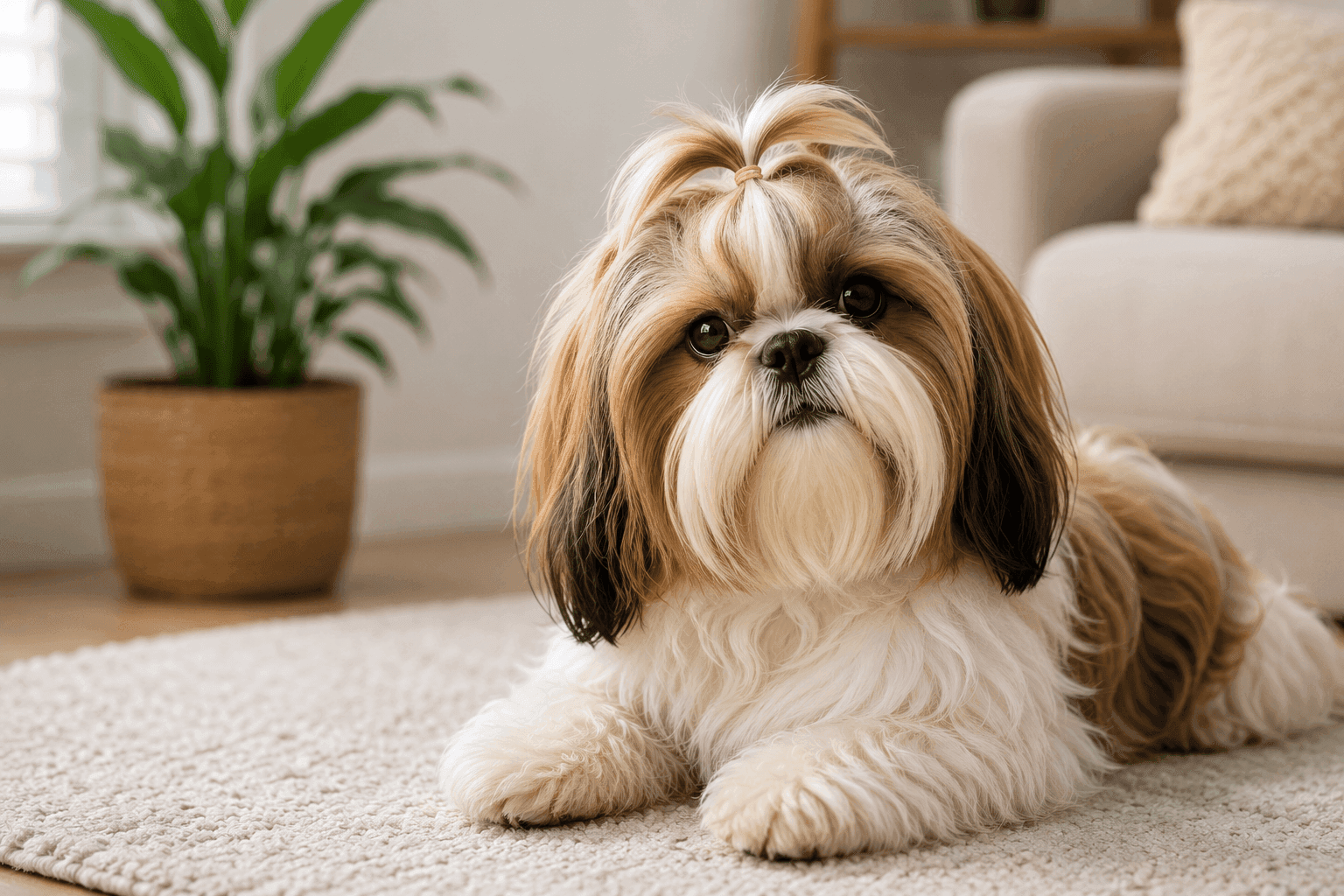
You vacuum the living room, fold freshly washed clothes, and just a few hours later, you notice a few strands of your Shih Tzu's hair on the sofa. It's a moment almost every new owner experiences. Naturally, the first question that comes to mind is, "I thought Shih Tzus don't shed. Is something wrong?"
The truth is more reassuring than you might think.
Despite their reputation as one of the best low-shedding companion breeds, Shih Tzu shedding is completely normal. Like humans lose hair every day, Shih Tzus also lose individual hair strands as part of their natural hair growth cycle. What makes this breed different is that the shed hair often gets trapped within its long, silky coat instead of floating around your home.
However, excessive hair fall can sometimes signal poor grooming, nutritional deficiencies, allergies, parasites, or an underlying medical condition. Understanding the difference between normal shedding and abnormal hair loss helps you keep your Shih Tzu comfortable, healthy, and looking its best.
If you're planning to bring home a puppy, choosing a healthy puppy from a trusted breeder is equally important. Explore Shih Tzu Puppies for Sale in Delhi NCR.
In this guide, we'll explain everything you need to know—from why Shih Tzus shed and how much is normal to practical grooming routines, seasonal care tips, and warning signs that deserve veterinary attention.
Quick Answer
Do Shih Tzus Shed?
Yes, Shih Tzus do shed, but very little compared to most dog breeds. Their hair grows continuously like human hair, so loose strands usually remain trapped within the coat instead of falling around the house. Regular brushing removes this loose hair, keeps the coat healthy, and significantly reduces visible shedding.
Do Shih Tzus Shed?
Many first-time owners are surprised to learn that Shih Tzus aren't completely non-shedding dogs. The reality is that every dog sheds to some extent. What differs is the amount of hair they lose and how noticeable that shedding becomes.
Shih Tzus belong to the group of low-shedding dog breeds, making them an excellent choice for apartment owners, families, and working professionals looking for a cleaner indoor environment.
Hair vs. Fur: Why It Matters
One reason Shih Tzus appear to shed less is the unique nature of their coat.
Most dogs have fur that grows to a certain length before naturally falling out and being replaced. This creates noticeable seasonal shedding.
Shih Tzus, on the other hand, have hair rather than traditional fur. Their hair grows continuously, much like human hair, and has a longer growth cycle. Instead of dropping freely onto your furniture, loose strands usually stay tangled within the surrounding coat until they're brushed out.
That's why many owners notice hair in their brush rather than all over the floor.
Shih Tzu Hair vs Typical Dog Fur
Feature
Shih Tzu Hair
Typical Dog Fur
Growth Cycle
Long and continuous
Shorter cycle
Shedding
Low
Moderate to heavy
Loose Hair
Gets trapped in coat
Falls around the house
Grooming Need
High
Moderate
Coat Maintenance
Daily or frequent brushing
Depends on breed
Although Shih Tzu hair fall is usually minimal, neglecting grooming allows loose hair to accumulate inside the coat. Over time, this creates mats and tangles that can become painful and difficult to remove.
How Much Shedding Is Normal?
Healthy Shih Tzus typically lose only a small number of hairs each day. You may notice:
A little hair on the brush after grooming
A few strands on bedding
Minimal hair on clothes
Slightly more hair during seasonal weather changes
Some increased shedding after bathing
This is considered completely normal.
A well-fed, regularly groomed Shih Tzu should not leave large amounts of hair around the home.
If you suddenly notice clumps of hair, bald patches, excessive scratching, or skin irritation, it's time to investigate further.
Why Do Shih Tzus Shed?
While light shedding is a natural process, several factors can increase hair loss. Understanding these causes helps owners identify whether their Shih Tzu simply needs better grooming or professional veterinary care.
1. Seasonal Coat Changes
Although Shih Tzus don't experience dramatic seasonal shedding like double-coated breeds, many still lose slightly more hair during changes in weather.
In India, this is especially noticeable before summer or after the monsoon, when the body adjusts to changing temperatures and humidity levels.
The increase is usually mild and temporary.
2. Puppy Coat Transition
One of the most common reasons owners panic is when their young Shih Tzu suddenly starts losing more hair.
Around4 to 8 months of age, puppies gradually replace their soft puppy coat with their adult coat. During this transition, increased shedding is perfectly normal.
Owners may notice:
More loose hair while brushing
Tangles forming more quickly
Texture changes
Coat becoming denser
Regular brushing during this phase prevents painful matting and supports healthy coat development.
3. Poor Nutrition
A healthy coat starts from the inside.
Hair is made primarily of protein, so poor-quality diets often show their effects first on the skin and coat.
Nutritional deficiencies can lead to:
Dull coat
Dry skin
Brittle hair
Increased shedding
Slow hair regrowth
Shih Tzus benefit from balanced diets containing:
High-quality animal protein
Healthy fats
Essential fatty acids
Vitamins
Minerals
Adequate hydration
A healthy diet won't eliminate shedding, but it can greatly improve coat quality.
4. Stress and Anxiety
Dogs can experience emotional stress just like humans.
Major life changes such as:
Moving to a new home
Long travel
Boarding
Separation anxiety
Loud festivals
Fireworks
Introduction of another pet
can temporarily increase hair loss.
Stress-related shedding usually improves once the dog feels secure again.
Skin allergies are among the most common reasons for excessive Shih Tzu hair fall.
Possible triggers include:
Dust mites
Pollen
Food ingredients
Household cleaning products
Shampoo ingredients
Grass
Mold
Signs often include:
Constant scratching
Red skin
Ear infections
Paw licking
Hair thinning
Hot spots
Persistent allergies require proper veterinary diagnosis rather than repeated shampoo changes or home remedies.
6. Parasites
External parasites can quickly damage coat health.
Common culprits include:
Fleas
Ticks
Mites
These parasites irritate the skin, leading to scratching, inflammation, and hair loss.
Regular parasite prevention is an essential part of every Shih Tzu grooming and healthcare routine.
7. Hormonal or Medical Conditions
Sometimes shedding is a symptom rather than the problem itself.
Medical conditions that may contribute include:
Hypothyroidism
Cushing's disease
Skin infections
Hormonal imbalances
Autoimmune disorders
Unlike normal shedding, these conditions usually produce additional symptoms such as:
Weight changes
Lethargy
Skin discoloration
Poor coat quality
Slow hair regrowth
Veterinary evaluation is important if these signs appear.
8. Lack of Grooming
Many owners mistakenly believe less brushing means less shedding.
In reality, the opposite is true.
Without regular brushing:
Loose hair remains trapped.
Mats develop.
Dirt accumulates.
Moisture gets trapped.
Skin ventilation decreases.
Hair breaks more easily.
Eventually, owners notice what appears to be "heavy shedding," when much of it is actually weeks of trapped loose hair finally coming out all at once.
A simple brushing routine several times a week makes an enormous difference in coat health and cleanliness.
When Is Shedding a Sign of a Health Problem?
A few loose hairs are nothing to worry about, but sudden or excessive hair loss should never be ignored. While normal Shih Tzu shedding is light and evenly distributed, certain changes in the coat can indicate an underlying health issue that requires veterinary attention.
Watch for these warning signs:
Hair falling out in large clumps
Bald patches or thinning areas
Persistent scratching or biting at the skin
Redness, rashes, or inflamed skin
Scabs, sores, or foul-smelling skin
Excessive dandruff or flaky skin
Hair loss around the eyes, ears, or paws
Sudden dullness or brittle coat texture
Weight loss, low energy, or changes in appetite along with hair fall
These symptoms may be linked to allergies, fungal or bacterial infections, parasites, hormonal disorders, or nutritional deficiencies. Early diagnosis often leads to quicker treatment and prevents further discomfort for your dog.
Veterinary Tip: If your Shih Tzu's shedding increases dramatically for more than two to three weeks or is accompanied by skin irritation, avoid self-medicating with over-the-counter products. A veterinarian can identify the root cause through a physical examination and recommend the most appropriate treatment.
Shih Tzu Shedding Through Different Life Stages
A Shih Tzu's coat changes throughout its life, and understanding these stages helps you know what to expect.
Life Stage
What to Expect
Grooming Focus
Puppy (2–8 months)
Soft puppy coat with light shedding. Around 4–8 months, the puppy coat transitions to the adult coat, causing temporary increased hair fall.
Gentle brushing 3–4 times a week, introduce grooming gradually, keep sessions positive.
Young Adult (8 months–2 years)
Adult coat becomes longer, denser, and silkier. Loose hair is more likely to get trapped in the coat.
Brush daily or at least 4–5 times a week to prevent tangles and mats.
Adult (2–7 years)
Shedding remains low if the dog is healthy and well-groomed. Coat quality is usually at its best during this stage.
Maintain a consistent grooming routine, balanced diet, and regular health check-ups.
Senior (7+ years)
Aging may slow hair growth, and hormonal changes or age-related health conditions can affect coat thickness.
Use softer brushes, monitor for skin changes, and consult a veterinarian if shedding increases unexpectedly.
Understanding these life stages helps you distinguish between normal coat changes and potential health concerns, ensuring your Shih Tzu receives the right care at every age.
Seasonal Shedding in India: What Shih Tzu Owners Should Know
India's diverse climate has a noticeable impact on your Shih Tzu's skin and coat. While Shih Tzus don't "blow" their coat like double-coated breeds, changes in temperature, humidity, and environmental conditions can influence the amount of hair you notice during grooming.
Adjusting your Shih Tzu grooming routine according to the season helps maintain a healthy coat and reduces unnecessary hair fall.
Summer Care (March–June)
Indian summers can be extremely hot, especially in cities where temperatures regularly exceed 35°C. Although Shih Tzus have a long coat, shaving it completely is not recommended unless advised by a veterinarian. Their coat provides some protection against heat and sunlight.
During summer, you may notice:
Slightly increased shedding
Dry skin due to dehydration
Dust collecting in the coat
More panting and sweating through paw pads
Summer Grooming Tips
✔ Brush 4–5 times a week to remove loose hair and dust.
✔ Always provide clean drinking water.
✔ Walk your dog during early mornings or evenings.
✔ Keep the coat trimmed (not shaved) for easier maintenance.
✔ Use a dog-safe moisturizer if your veterinarian recommends one for dry skin.
Monsoon Care (July–September)
Monsoon is often the most challenging season for Shih Tzu coat care in India. High humidity slows down drying after baths or walks, creating an ideal environment for fungal and bacterial infections.
Common issues include:
Damp coat
Foul odor
Skin irritation
Hot spots
Increased tangles
Fungal infections between paw pads
Monsoon Grooming Tips
✔ Dry the coat thoroughly after every bath or rainy walk.
✔ Pay extra attention to the belly, paws, and ears.
✔ Brush regularly to prevent mats from trapping moisture.
✔ Clean paws after outdoor walks.
✔ Wash bedding frequently to reduce bacteria and allergens.
Winter Care (October–February)
Winter is generally easier for Shih Tzu owners, but cooler temperatures and lower humidity can cause dry skin in some regions of India.
You might notice:
Mild dandruff
Static in the coat
Dry paw pads
Slight hair breakage
Winter Grooming Tips
✔ Reduce bathing frequency if the skin becomes dry.
✔ Continue regular brushing.
✔ Avoid using very hot water during baths.
✔ Keep your Shih Tzu warm during cold nights.
✔ Ensure adequate hydration, as dogs often drink less water in winter.
Complete Grooming Routine to Reduce Shedding
Consistent grooming is the most effective way to manage Shih Tzu shedding. Since loose hair often remains trapped in the coat, regular maintenance prevents tangles, mats, and skin problems.
1. Brushing Routine
Brushing is the foundation of Shih Tzu coat care.
Recommended Frequency
Long coat: Daily
Short "puppy cut": 3–4 times per week
Benefits include:
Removes loose hair
Prevents mats
Distributes natural oils
Improves blood circulation
Keeps the coat shiny
Always brush gently from the ends of the hair toward the roots to avoid pulling.
2. Bathing Schedule
A Shih Tzu doesn't need frequent baths unless it gets particularly dirty.
A bath every 3–4 weeks is usually sufficient for most pet dogs.
Bathing too often can strip natural oils, leading to dry skin and increased hair breakage.
3. Dry the Coat Properly
Never leave your Shih Tzu's coat damp after bathing.
Moisture trapped close to the skin can encourage fungal growth, especially during India's humid months.
Use:
A soft towel
A pet dryer on a low-heat setting
Gentle brushing while drying
4. Ear Cleaning
Shih Tzus have floppy ears, which can trap moisture and wax.
Check their ears weekly and clean them using a veterinarian-approved ear cleaner if needed.
Never insert cotton buds deep into the ear canal.
5. Eye Cleaning
Because of their prominent eyes, Shih Tzus are prone to tear staining.
Use a soft, damp cotton pad or pet-safe eye wipes to gently clean around the eyes each day.
Keeping this area clean also helps prevent skin irritation.
6. Paw Care
Dust, mud, and allergens often collect between the paw pads.
After walks:
Wipe the paws clean
Dry thoroughly during monsoon
Trim excess hair between paw pads if necessary
This reduces the risk of infections and improves comfort.
7. Nail Trimming
Overgrown nails can affect your dog's posture and walking style.
Trim nails every 3–4 weeks, or as needed, using dog nail clippers. If you're unsure, seek help from a professional groomer or veterinarian.
8. Coat Trimming
Regular trims help keep the coat manageable and reduce tangles, especially in warm Indian climates.
Many pet parents choose a practical puppy cut, which is easier to maintain while still preserving the breed's characteristic appearance.
Diet That Supports a Healthy Coat
Healthy skin and a glossy coat begin with proper nutrition. While no diet can completely stop shedding, the right nutrients help strengthen hair follicles and reduce excessive hair loss.
Focus on These Nutrients
High-Quality Protein Hair is primarily made of protein, so choose a balanced diet that includes quality animal protein.
Omega-3 & Omega-6 Fatty Acids These healthy fats support skin health, improve coat shine, and reduce dryness.
Essential Vitamins & Minerals Nutrients such as vitamins A, E, biotin, and zinc contribute to healthy skin and hair growth. Feed a complete, balanced diet rather than adding supplements unless advised by your veterinarian.
Hydration Water plays an important role in maintaining skin elasticity and overall coat condition. Always ensure your Shih Tzu has access to fresh, clean drinking water.
Foods to Avoid
Avoid feeding:
Chocolate
Grapes and raisins
Onions and garlic
Xylitol (artificial sweetener)
Alcohol
Excessively fatty or spicy foods
Cooked bones
Human foods that are unsafe for dogs can cause digestive issues and, in some cases, serious health problems.
Best Grooming Tools for Shih Tzus
The right grooming tools make coat maintenance easier and more comfortable for your dog.
Grooming Tool
Purpose
Slicker Brush
Removes loose hair, dirt, and minor tangles while keeping the coat smooth.
Stainless Steel Comb
Helps check for hidden knots and finishes the coat after brushing.
Dematting Comb
Safely loosens stubborn mats without pulling excessively when used correctly.
Grooming Scissors
Trims hair around the paws, eyes, and sanitary areas between grooming appointments.
Dog Shampoo
Cleans the skin and coat without stripping natural oils. Always use a shampoo formulated specifically for dogs.
Conditioner
Keeps the coat soft, reduces tangles, and helps minimize hair breakage.
Common Grooming Mistakes That Increase Shedding
Even caring owners can unknowingly make mistakes that affect coat health.
Avoid these common errors:
Skipping regular brushing
Bathing too frequently
Using human shampoo
Leaving the coat damp after bathing
Ignoring small tangles until they become mats
Feeding an unbalanced diet
Delaying parasite prevention
Waiting too long before seeking veterinary advice for excessive hair loss
Small changes to your grooming routine can make a noticeable difference in your Shih Tzu's coat quality.
Can People With Allergies Own a Shih Tzu?
Many people believe Shih Tzus are completely hypoallergenic, but that's a common misconception.
No dog breed is truly 100% hypoallergenic.
However, Shih Tzus are often a better choice for allergy-sensitive households because they:
Shed less than many other breeds
Release less airborne dander
Trap loose hair within their coat rather than spreading it around the home
If someone in your household has allergies, spend time around the breed before bringing one home. Regular grooming, frequent cleaning, and using air purifiers can also help reduce indoor allergens.
Expert Tips from GoodFurs
At GoodFurs, we believe that a beautiful coat starts with responsible breeding, preventive healthcare, and consistent daily care—not quick fixes.
Here are a few practical tips we share with every Shih Tzu parent:
Brush your Shih Tzu before tangles become mats.
Schedule regular veterinary check-ups to monitor skin and coat health.
Follow a vaccination and parasite prevention schedule.
Choose a balanced, breed-appropriate diet instead of relying on supplements without professional advice.
Introduce grooming early so your puppy becomes comfortable with handling.
During India's humid months, never leave the coat damp after bathing or rainy walks.
Shih Tzu Puppies for Sale in Bangalore from ethical breeders often have a stronger foundation for lifelong coat and skin health, provided they receive proper nutrition, grooming, and routine veterinary care.
Conclusion
Understanding Shih Tzu shedding helps you separate normal hair loss from signs of potential health concerns. While this breed is naturally low-shedding, regular brushing, a balanced diet, proper grooming, and timely veterinary care are essential for maintaining a healthy, beautiful coat.
For Indian pet parents, adapting your grooming routine to the changing seasons can make a significant difference in preventing matting, reducing skin issues, and keeping your Shih Tzu comfortable throughout the year.
If you're planning to welcome a Shih Tzu into your family, start with a healthy foundation. At GoodFurs, we connect responsible pet parents with healthy, vaccinated, ethically bred, KCI-certified Shih Tzu puppies, backed by expert guidance, transparent processes, and ongoing support to help you give your new companion the best possible start in life.
Confused about Poodle sizes? Compare Toy, Miniature, Standard & "Teacup" Poodles — height, weight, care needs & which suits Indian homes best.
Frequently Asked Questions
No. Shih Tzus are considered a low-shedding breed. They lose small amounts of hair daily, but most loose strands remain trapped in their coat until brushed out.