
How to Prepare Your Home Before Labrador Puppy Delivery: Complete Checklist for First-Time Buyers
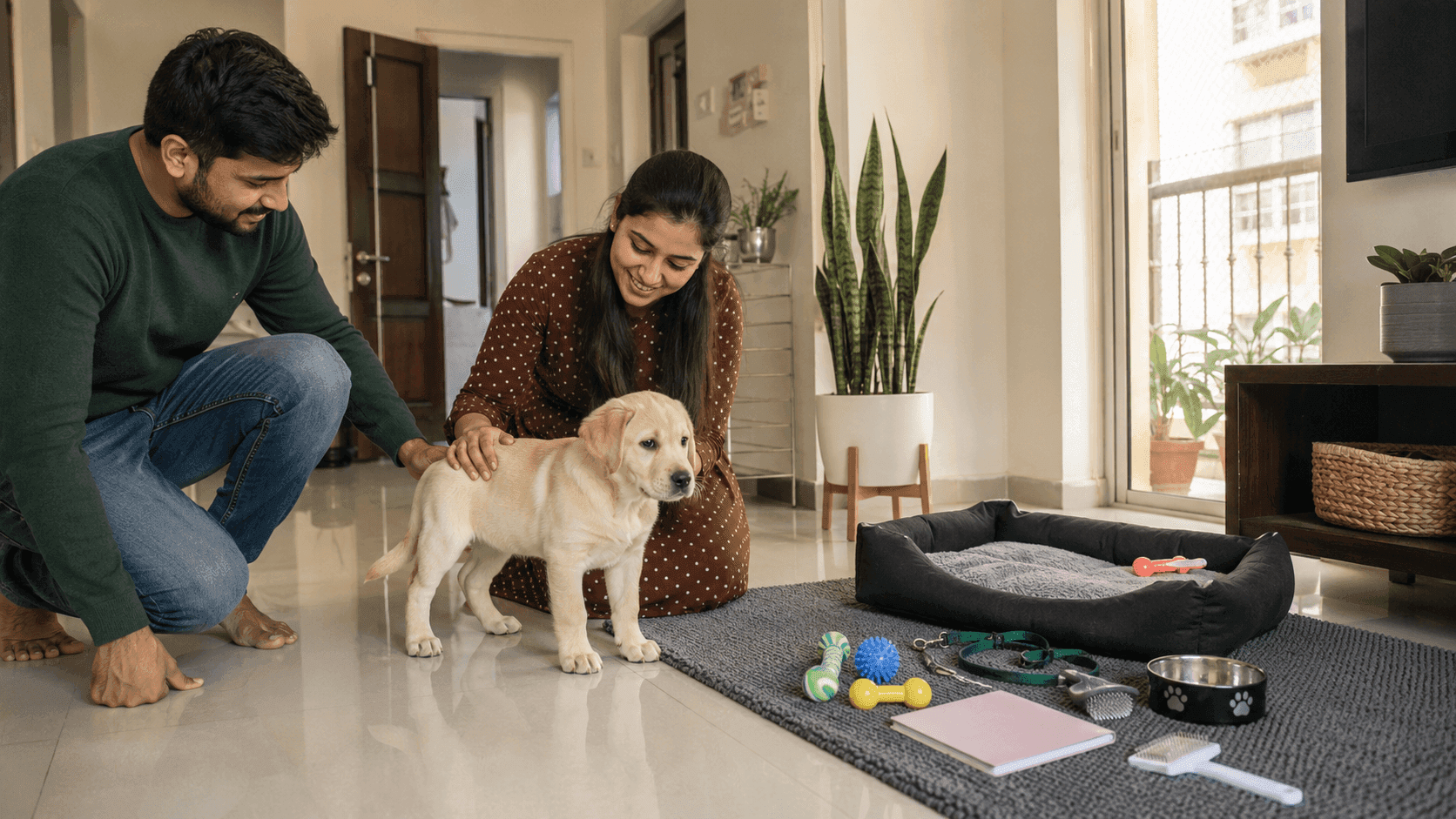
On Thursday evening, an Indian family living in a two-bedroom apartment receives confirmation that their eight-week-old Labrador puppy will arrive on Saturday morning.
Everyone is excited. The children are choosing names, the parents are searching for puppy beds, and relatives are already asking when they can visit.
However, the apartment is not ready. Phone chargers are lying near the floor, the balcony railing has wide gaps, small toys are under the sofa, and no one has decided where the puppy will sleep.
Preparing for a Labrador puppy requires more than buying a bed and food bowl. Families should puppy-proof the home, prepare a quiet sleeping area, arrange appropriate food, secure balconies and wires, collect health records and create a simple routine before delivery day.
Start Preparing a Few Days Before Delivery
Labrador puppy home preparation should begin at least three to five days before the expected arrival.
Use this time to purchase essential supplies, ask what food the puppy currently eats, confirm the delivery time and select a nearby veterinarian. Every family member should also understand how to lift, feed and supervise the puppy safely.
Decide where the puppy will sleep and where toilet training will begin. Remove hazards before the puppy enters the home rather than trying to control the puppy around unsafe objects.
A sudden food change, too many visitors or unrestricted access to the entire house can make the adjustment more difficult.
Choose a Safe and Quiet Sleeping Area
A Labrador puppy should sleep in a calm area that is close to the family but away from constant movement.
Choose an easy-to-clean space without exposed wires, unstable furniture, direct afternoon sunlight or strong air-conditioning airflow. A washable bed or padded mat is usually enough. A correctly sized crate or playpen may also help create a secure resting space when introduced positively.
The family in our story initially plans to place the puppy in a utility room. They later choose a quiet corner of the living room where the puppy can hear and see them during the first few nights.
Never leave a young puppy alone on a balcony, terrace, staircase landing or in a locked room away from the family.
Puppy-Proof Every Accessible Room
Labrador puppies explore unfamiliar surroundings with their nose and mouth. Anything within reach may be chewed, swallowed or pulled.
Hide Electrical Wires and Chargers
Secure cables behind furniture, use cable covers and unplug chargers that are not being used. Do not depend only on verbal correction because a curious puppy can reach a wire within seconds.
Remove Small Objects
Check under beds, sofas and tables for:
- Coins and batteries
- Children’s toys
- Socks and hair bands
- Medicine strips
- Jewellery
- Rubber bands
- Plastic pieces
- Earphones and charging accessories
Small objects should be stored in closed drawers or cabinets.
Secure Medicines and Cleaning Products
Floor cleaners, detergents, mosquito products, phenyl, pesticides, human medicines and bathroom chemicals should be kept in locked or elevated cabinets.
Remember that a low kitchen shelf that appears closed may still be opened or chewed by a growing Labrador.
Protect Furniture and Curtains
Use temporary gates to restrict access to selected rooms. Keep curtains tied away from the floor and provide suitable chew toys to redirect normal chewing behaviour.
Supervision and consistency are more useful than punishment.
Check Doors, Windows and Staircases
Ensure that the main door cannot be left open accidentally. Check window screens, sliding doors, lift-lobby access and staircase gaps.
Families living in apartments should also read the GoodFurs guide to preparing an apartment for a Labrador
Make the Balcony Safe
A Labrador puppy should never be left alone on an open balcony.
Check the gaps between railings, the height of the parapet wall and whether chairs, tables or plant stands could be used for climbing. Remove chemicals, buckets with standing water and unstable plant pots.
Install secure pet-safe netting where required, but continue supervising the puppy. Netting should not be treated as permission to leave the puppy outside unattended.
During Indian summers, balcony flooring can become extremely hot. Direct afternoon sunlight and poor ventilation can also make the area uncomfortable.
Prepare Non-Slip Flooring
Polished marble and smooth tiles can be slippery for an active puppy.
Place washable rugs, runners or non-slip mats near the bed, food bowls and regular play areas. Keep wet floors dry and restrict repeated use of stairs.
Avoid encouraging the puppy to jump continuously from sofas or beds. Speak with a veterinarian if you notice unusual movement, discomfort or difficulty walking.
Essential Labrador Puppy Shopping Checklist
| Item | Why it is needed | Essential or optional | Buying tip |
|---|---|---|---|
| Food and water bowls | Daily feeding and hydration | Essential | Choose stable, easy-to-clean bowls |
| Familiar puppy food | Prevents sudden diet changes | Essential | Confirm the current brand and variety |
| Washable bed or mat | Provides a fixed resting space | Essential | Choose removable, washable fabric |
| Collar and ID tag | Identification and early handling | Essential | Ensure a comfortable, adjustable fit |
| Harness and leash | Controlled movement and future walks | Essential | Select puppy-appropriate sizing |
| Chew toys | Redirects normal chewing | Essential | Avoid toys with easily detachable parts |
| Training treats | Supports reward-based learning | Optional | Use small, age-appropriate treats |
| Grooming brush | Introduces coat care | Essential | Choose a gentle puppy brush |
| Puppy shampoo | Used when bathing is appropriate | Optional initially | Select a puppy-safe product |
| Nail clipper | Future nail maintenance | Optional | Ask a groomer or vet for guidance |
| Enzyme cleaner | Removes accident odour | Essential | Choose a pet-safe cleaner |
| Training pads | Temporary toilet-training support | Optional | Do not depend on them permanently |
| Poop bags | Hygienic waste disposal | Essential | Keep them near the exit |
| Crate or playpen | Creates a controlled safe area | Optional | Never use it as punishment |
| Puppy gate | Restricts unsafe rooms or stairs | Optional | Check the height and locking system |
| Cooling mat | Useful in hot weather | Optional | Supervise to prevent chewing |
| Car restraint or travel crate | Safer transportation | Essential for travel | Choose according to the puppy’s size |
Designer accessories are unnecessary. Safety, durability, correct sizing and ease of cleaning are more important than appearance.
Families should also consider recurring expenses such as food, vaccinations, grooming and training. The Labrador monthly cost guide can help create a realistic budget.
Keep the Puppy’s Current Food Ready
Do not change the puppy’s food immediately after delivery.
Ask the breeder or GoodFurs team what the puppy is currently eating, how often it is fed and what quantity has been recommended. Keep enough of the same food available for the first several days.
Use clean bowls and provide fresh drinking water. Avoid giving milk, spicy leftovers, biscuits or random treats.
Any diet transition should be gradual and based on the puppy’s age, weight, body condition, food instructions and professional advice. Monitor appetite after arrival and speak with a veterinarian if the puppy repeatedly refuses food or appears unwell.
Prepare a Toilet-Training Area
Toilet accidents are normal during the adjustment period.
Choose one consistent area and take the puppy there after waking, eating and playing. Training pads may be used temporarily when outdoor access is limited, but the routine should remain predictable.
The family in our story selects a washable area near the entrance rather than allowing the puppy to roam throughout the apartment.
Reward correct behaviour calmly. Never shout, hit or rub the puppy’s nose in an accident. Clean the area properly with a pet-safe enzyme cleaner.
Apartment residents should understand building rules and use the lift carefully. Avoid crowded public areas until the veterinarian advises that outside exposure is appropriate.
Decide Family Responsibilities
Daily responsibilities should be assigned before the puppy arrives.
Decide who will:
- Feed the puppy
- Handle early-morning toilet breaks
- Clean accidents
- Arrange veterinary appointments
- Supervise training
- Monitor interactions with children
- Manage future walks
- Care for the puppy during work hours and travel
Children can help with simple supervised tasks, but they should not be made solely responsible for a young puppy.
Prepare Children for the Puppy
Children should sit calmly and allow the puppy to approach them during the first meeting.
They must not pull the puppy’s ears or tail, hug it tightly, chase it, shout near it or disturb it while it is eating or sleeping. Food and toys should not be taken away as a game.
Labradors are generally known for being social and family-oriented, but every puppy still needs respectful handling and adult supervision.
Introduce Existing Pets Gradually
Keep the first introduction calm and controlled.
Allow gradual scent introduction, supervise all early interactions and keep food bowls separate. Each pet should have access to its own resting area.
Do not force the animals to play or stay close together. Some pets adjust quickly, while others need more time. Seek professional guidance if either animal shows persistent fear or aggression.
Check Health and Delivery Documents
Prepare a delivery-day document checklist containing:
- Vaccination record
- Deworming record
- Date of birth
- Feeding instructions
- Current food details
- Breed and parent information, where available
- Veterinary notes, if applicable
- KCI-related documents, where applicable
- Purchase or delivery confirmation
- Follow-up contact information
KCI registration relates primarily to pedigree documentation. It does not independently guarantee the puppy’s health, behaviour or future temperament.
Health should be evaluated through available records, responsible breeding practices, physical condition and a qualified veterinary examination. Keep digital and physical copies of all records.
Preparing for Delivery in Delhi NCR
Delhi NCR families should consider summer heat, long travel times and seasonal air-quality concerns.
Keep the indoor space cool and ventilated, and avoid scheduling delivery during extreme afternoon heat where possible. Confirm travel timing across Delhi, Noida, Gurugram and Ghaziabad, especially during peak traffic hours.
Gated-society residents should check entry and pet rules in advance. Families can explore healthy Labrador puppies across Delhi NCR while planning a safe delivery schedule.
Preparing for Delivery in Mumbai
Mumbai homes often require additional planning for humidity, monsoon rain and compact apartment layouts.
Keep drying towels, paw-cleaning cloths and a dry toilet-training area ready. Secure balconies carefully and understand lift and building pet policies.
During heavy rain, coordinate delivery timing and ensure the puppy is not exposed unnecessarily to wet or crowded areas. Check Labrador puppy availability in Mumbai before discussing transportation arrangements.
Preparing for Delivery in Bangalore
Working professionals in Bangalore should create a care plan for office hours before the puppy arrives.
Confirm gated-community rules, balcony safety and nearby veterinary access. Traffic can significantly affect delivery time, so keep your phone available and avoid planning other commitments around the expected arrival.
Rain-related paw care and access to reliable trainers or walkers may also be considered. Families can view Labrador puppies available in Bangalore and discuss suitable delivery coordination.
Preparing for Delivery in Pune
Families in Wakad, Baner, Hinjewadi, Hadapsar and Viman Nagar should consider society rules, traffic and access to safe outdoor spaces.
Prepare for both summer heat and monsoon conditions. Identify a nearby veterinarian and check whether a reliable dog walker is available for future support.
Delivery should be scheduled when an adult family member can remain at home. Explore healthy Labrador puppies available in Pune while creating your preparation plan.
What to Do When the Puppy Arrives
- Keep the home calm and limit visitors.
- Allow the puppy to explore one small area.
- Show the puppy its bed and toilet area.
- Offer fresh water.
- Provide familiar food at the normal time.
- Avoid immediate bathing.
- Keep play sessions short.
- Ask children to remain calm.
- Store all health records safely.
- Observe appetite, movement and behaviour.
The puppy may seem quiet, sleepy, nervous or unusually excited. Travel and a new environment can affect behaviour temporarily.
The First Night
When the family turns off the lights, the puppy begins to cry. Instead of assuming it is being difficult, they remember that it has recently left its mother, littermates and familiar environment.
Keep the sleeping area close to the family initially. Take the puppy for a calm toilet break if necessary, but avoid turning nighttime crying into an energetic play session.
Keep lights and noise low and follow a predictable bedtime routine. Never punish the puppy for crying.
Contact a veterinarian if crying is accompanied by persistent distress, repeated vomiting, diarrhoea, breathing difficulty, unusual weakness or other concerning symptoms.
The First 24 Hours
Monitor food and water intake, urination, bowel movements and movement. Give the puppy plenty of time to sleep and avoid inviting many visitors.
Limit access to a small, safe part of the house. Continue the previous diet and begin gentle name recognition using calm praise.
Arrange the first veterinary check-up and avoid crowded public grounds or dog parks until your veterinarian has reviewed the vaccination records and advised you about safe outdoor exposure.
Schedule a Veterinary Check-Up
Identify a qualified veterinarian before delivery.
The first appointment may include a general health examination, record review, weight assessment, feeding advice, deworming guidance and discussion of flea and tick prevention.
The veterinarian should create or confirm the vaccination schedule according to the puppy’s age, existing records and health. Ask for emergency contact details and guidance about safe socialisation.
Common Preparation Mistakes
Avoid buying supplies only after delivery, changing food on the first day, inviting many visitors or giving the puppy immediate access to the whole house.
Other common mistakes include leaving the balcony unsecured, allowing children to carry the puppy constantly, using slippery floors, punishing toilet accidents, bathing immediately and leaving the puppy alone for several hours.
A friendly Labrador still requires boundaries, supervision and consistent training.
24-Hour Pre-Delivery Checklist
- Home puppy-proofed
- Balcony secured
- Electrical wires hidden
- Familiar food purchased
- Water bowl cleaned
- Sleeping area prepared
- Toilet area selected
- Safe toys ready
- Harness and leash available
- Cleaning supplies ready
- Family responsibilities assigned
- Children briefed
- Veterinarian selected
- Delivery time confirmed
- Health-record checklist prepared
- Emergency contact saved
- Phone charged for coordination
Is Your Home Truly Ready?
Before confirming delivery, ask whether your family has enough time, budget, safe indoor space and patience for daily supervision and training.
You also need a plan for working hours, holidays, healthcare costs and emergencies. Confirm that everyone in the household agrees with the decision and that your housing rules allow pets.
A Labrador may remain part of your family for approximately a decade or longer. Postponing the decision until your home is ready is more responsible than bringing a puppy home impulsively.
Review the GoodFurs frequently asked questions before making the final decision.
How GoodFurs Supports Labrador Buyers
GoodFurs helps families understand Labrador suitability, explore puppy availability by city and discuss delivery preparation.
Buyers can ask about available health and vaccination information, current feeding details, KCI-related documentation where applicable and delivery coordination.
GoodFurs does not replace veterinary care or guarantee a puppy’s future health or temperament. A veterinary examination remains an important part of responsible ownership.
Final Thoughts
By Saturday morning, the family’s home looks different. Electrical wires are secured, the balcony is closed, familiar food is ready and a washable sleeping corner has been prepared.
They also have a toilet-training area, a health-record checklist and a calm plan for the puppy’s first night.
Preparing a home does not need to be expensive or perfect. It needs to be safe, thoughtful and consistent.
The best welcome for a Labrador puppy is not a room filled with designer accessories. It is a prepared family, a predictable routine and a commitment to responsible long-term care.
Most read




Related Blogs
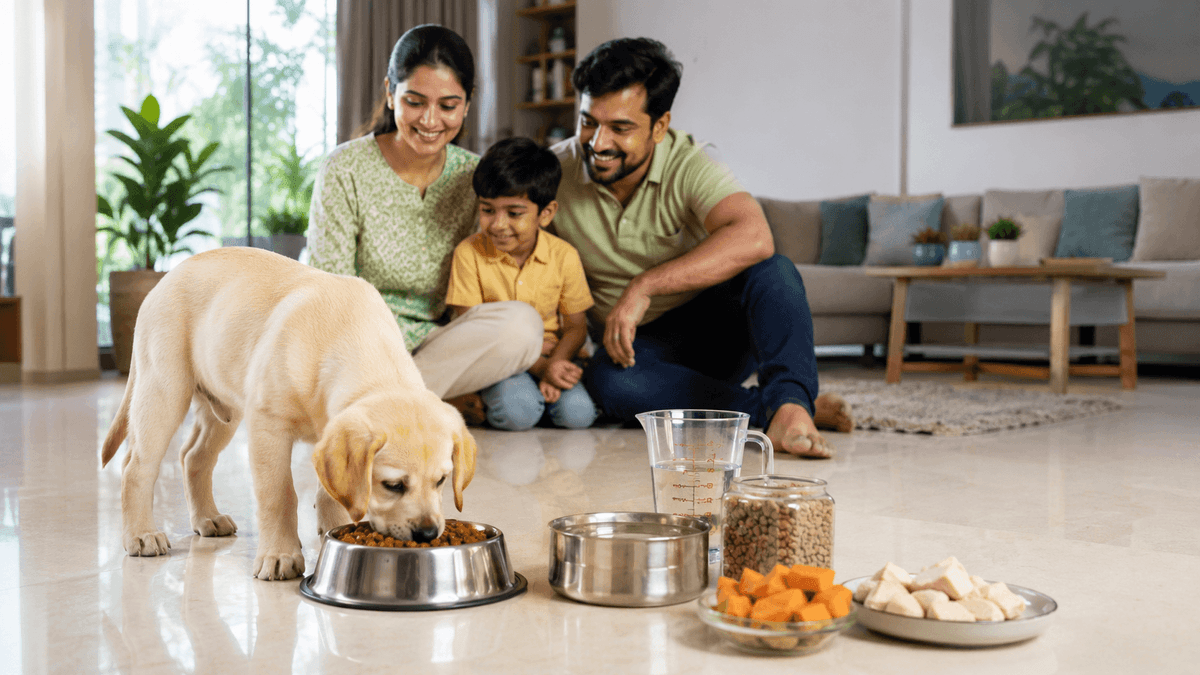
Labrador Puppy Feeding Schedule by Age (2–12 Months): Complete Indian Feeding Guide (2026)
Complete Labrador puppy feeding schedule by age, from 2 to 12 months. Indian feeding chart, foods to avoid, and expert-backed nutrition tips.
Frequently Asked Questions
Keep familiar puppy food, stable bowls, a washable bed, chew toys, a collar, harness, leash, cleaning supplies and a safe travel restraint ready.