
Labrador Puppy Feeding Schedule by Age (2–12 Months): Complete Indian Feeding Guide (2026)

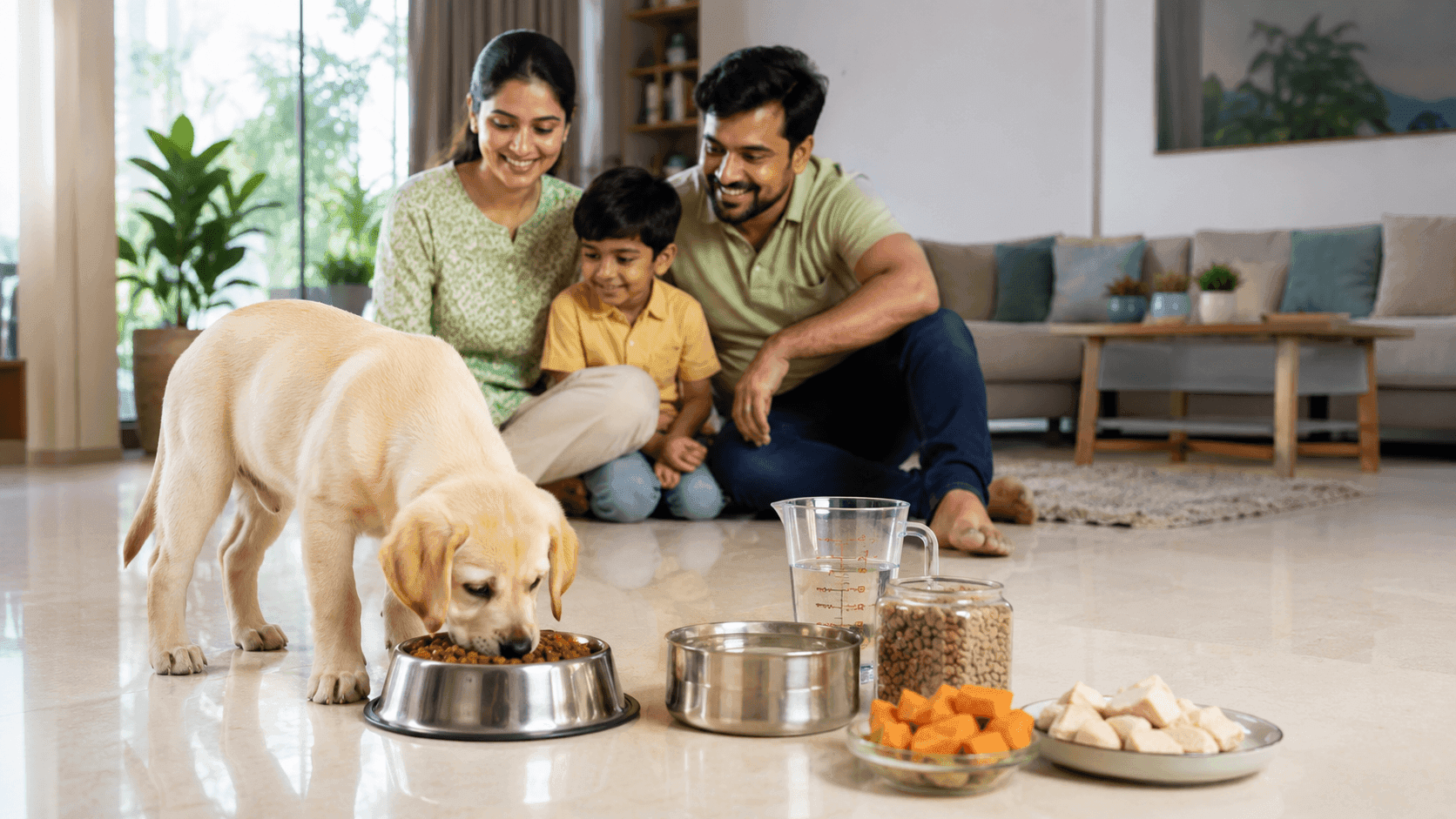
When the Malhotra family in Bangalore brought home their 8-week-old Labrador puppy, Simba, the first evening turned into a small debate. Simba's grandmother suggested a bowl of warm milk, "the way puppies have always been fed." Their neighbour, a first-time dog owner too, was convinced dry kibble was the only "scientific" option. A cousin visiting from Delhi insisted homemade rice and dal was gentler on a young stomach.
By the time dinner was over, nobody had actually fed Simba anything — and the family was left wondering what a Labrador puppy is really supposed to eat, and how often.
If this sounds familiar, you're not alone. Almost every new Labrador parent in India goes through this exact confusion in the first week. The good news is that feeding a Labrador puppy isn't complicated once you understand how their needs change as they grow.
A Labrador puppy's feeding schedule changes as it grows. Puppies between 2 and 3 months generally need smaller meals more frequently, while older puppies gradually transition to fewer meals. A balanced diet, fresh water, and guidance from your veterinarian are essential for healthy growth. If you're still deciding on a breed or want to know more about temperament and care needs, our Labrador breed page is a good place to start.
Why Proper Nutrition Matters During the First Year
The first 12 months of a Labrador's life are the busiest, physiologically speaking. A puppy that weighs around 1–1.5 kg at birth can grow to 25–35 kg as an adult — and almost all of that growth happens in this single year.
During this window, nutrition supports:
- Rapid growth — bones, joints, and muscle mass are developing quickly, especially in a large breed like the Labrador.
- Brain development — early nutrition plays a role in learning ability and trainability.
- Bone and joint development — Labradors are prone to joint issues later in life, and controlled, age-appropriate feeding (rather than rapid overfeeding) is often linked to better joint health.
- Muscle growth — needed to support their eventual size and activity levels.
- Immune support — puppies are more vulnerable to infections in the first few months.
- Healthy digestion — their digestive system is still maturing and adjusting to solid food.
- Coat quality — a shiny, healthy coat is often one of the simplest visible signs of good nutrition.
- Energy requirements — Labrador puppies are naturally active and curious, and need fuel to match.
None of this means every meal has to be perfect. It simply means consistency and age-appropriate portions matter more than any single "ideal" food brand.
Labrador Puppy Feeding Schedule by Age
2–3 Months
This is the stage the Malhotras were in with Simba. At 8–12 weeks, a Labrador puppy's stomach is still small, so frequent, smaller meals work better than large ones.
- Frequency: Typically 4 meals a day, spaced evenly.
- Portions: General guidance only — follow the quantity recommended on your puppy food packaging for your puppy's current weight, and adjust based on your vet's advice.
- Food texture: Soft, easily digestible food — soaked kibble or a vet-approved puppy formula works well at this stage, as young puppies can find hard kibble difficult to chew.
- Water: Fresh, clean water should be available at all times, refreshed several times a day.
- Foods to avoid: Cow's milk, spicy food, and anything from the family dinner table — more on this below.
3–4 Months
By 3 months, most puppies are a little more settled into a routine, though teething often begins around this stage.
- Frequency: Still around 3–4 meals a day, gradually moving toward 3.
- Growth stage: This is an active growth phase — appetite may increase noticeably.
- Training treats: This is a good age to start basic training, so small, low-calorie treats can be introduced — but they shouldn't replace meals or add up to a large portion of daily intake.
- Digestive care: Introduce any new food gradually over several days to avoid stomach upset.
4–6 Months
Labrador puppies often go through a visible growth spurt during this window — you may notice your puppy looking "leggy" or gawky, which is completely normal for the breed.
- Frequency: Most puppies move to 3 meals a day.
- Controlled calorie intake: Because Labradors are prone to overeating and later joint strain, this is an important stage to avoid overfeeding, even if your puppy seems constantly hungry.
- Avoid overfeeding: A puppy that finishes every bowl instantly and still begs isn't necessarily underfed — Labradors are famously food-motivated. Body condition, not enthusiasm at mealtime, is the better guide.
6–9 Months
Exercise needs typically increase during this period, and you'll notice more energy and stamina.
- Frequency: Many puppies transition to 2 meals a day around this stage, though some owners prefer to keep 3 slightly longer — either can work with the right guidance.
- Appetite changes: Appetite may fluctuate with growth spurts and activity levels.
- Weight monitoring: Regularly checking your puppy's body condition (you should be able to feel, but not see, the ribs) helps catch overfeeding or underfeeding early.
9–12 Months
This is the bridge between puppyhood and adulthood.
- Transition toward adulthood: Growth rate slows down compared to earlier months.
- Meal adjustments: Portion sizes are usually reassessed around this time, based on activity level and body condition.
- Veterinary guidance for switching to adult food: Most Labradors move to adult food somewhere between 12–15 months, but your vet is best placed to confirm timing for your specific puppy.
Labrador Puppy Feeding Chart
Exact gram quantities aren't included here deliberately — the right portion depends on your puppy's current weight, the specific food brand's density, activity level, and your veterinarian's recommendation. Always check the feeding guidelines printed on your puppy's food packaging as a starting point, and adjust from there.
Dry Food vs Homemade Food
This is usually the biggest point of disagreement in Indian households, as it was for the Malhotras.
There isn't one universally "correct" answer here. Many Indian families successfully raise healthy Labradors on commercial puppy food, homemade meals, or a thoughtful mix of both — the common thread is consulting a veterinarian to make sure the diet, whichever form it takes, is nutritionally complete.
Foods Labradors Can Eat
Always introduce new foods gradually and in small quantities, and check with your vet if your puppy has a sensitive stomach.
Foods Labradors Should Never Eat
If your puppy accidentally eats any of these, contact your veterinarian immediately rather than waiting to see if symptoms appear.
Healthy Treats for Training
Labrador puppies are quick learners and highly food-motivated, which makes them easy to train — but also easy to overfeed with treats.
- Keep treats small — pea-sized is often enough for a puppy.
- Use low-calorie, puppy-safe treats during obedience sessions.
- Treats should never replace a balanced meal or make up a large share of daily calories.
- Praise and play can substitute for food rewards once basic commands are learned.
Water Requirements
Fresh water is just as important as food, especially in Indian conditions.
- Keep water freely available throughout the day, not just at mealtimes.
- During summer, refresh water more often, as it warms up and becomes less appealing.
- Carry water on car rides or walks, particularly in hot months.
- After exercise or play, allow your puppy to drink but avoid letting them gulp excessively all at once.
- Watch for signs of dehydration — dry gums, lethargy, or reduced skin elasticity — and consult a vet if you notice these.
- Wash water bowls daily to prevent bacterial buildup, especially in humid weather.
Common Feeding Mistakes First-Time Owners Make
Like the Malhotras nearly did on day one, most new owners make at least one of these mistakes:
- Giving cow's milk — many Labrador puppies are lactose-intolerant and can develop diarrhoea.
- Overfeeding — often out of love, but it contributes to joint and weight problems later.
- Frequent food changes — switching brands too often can upset digestion.
- Too many treats — can lead to excess calorie intake without the owner realising it.
- Sharing spicy human food — Indian household food is often too spicy or oily for puppies.
- Feeding table scraps — encourages begging and can include unsafe ingredients.
- Ignoring body condition — relying on appearance alone rather than checking rib and waist definition.
- Sudden diet changes — should always be introduced gradually over several days.
- Inconsistent meal timings — irregular schedules can affect digestion and house-training.
Feeding Labradors During Indian Summers
Indian summers can be intense, and feeding routines may need small seasonal adjustments.
- Ensure hydration is prioritised — water intake often matters as much as food in peak summer.
- Serve fresh food promptly, and avoid letting meals sit out too long in the heat.
- Consider feeding during cooler parts of the day, such as early morning or evening.
- Store dry food in a cool, dry, sealed container to prevent spoilage.
- Watch for reduced appetite during extreme heat — this is common and usually temporary.
Feeding Labradors During Monsoon
The monsoon months bring their own set of considerations.
- Food hygiene becomes more important, as humidity encourages bacterial growth.
- Clean bowls thoroughly and dry them before refilling.
- Store dry kibble in airtight containers to prevent moisture and mould.
- Keep an eye on digestive health, as humidity and dampness can sometimes affect stool consistency.
Transitioning to Adult Food
Most Labradors are ready to move to adult food somewhere between 12 and 15 months, though this varies by individual puppy.
- Signs of maturity include a slowing growth rate and stabilising weight.
- Gradual transition — mix increasing amounts of adult food with puppy food over 7–10 days to avoid digestive upset.
- Veterinary consultation — your vet can confirm the right timing and food type based on your Labrador's growth and health.
- Monitoring digestion — watch for any signs of an upset stomach during the switch, and slow the transition if needed.
How to Know if Your Labrador Puppy Is Eating Well
Good nutrition usually shows up in visible, everyday signs:
- Steady, healthy weight gain appropriate for age
- Good energy levels and enthusiasm for play
- Bright, clear eyes
- A shiny, healthy coat
- Normal, consistent stool
- A healthy appetite (without constant desperate begging)
- Any sudden change in appetite is worth mentioning to your veterinarian
Buying a Healthy Labrador Puppy Starts Before Feeding
Good nutrition is only half the picture — it starts with bringing home a healthy puppy in the first place. A puppy from an unverified source may already carry health or genetic issues that no feeding schedule can fully offset.
If you're in Delhi NCR, considerations like access to good veterinary clinics and apartment-friendly routines matter when choosing a puppy — you can explore verified, vaccinated options on our Labrador puppies in Delhi NCR page.
Families in Mumbai often deal with smaller living spaces and higher humidity, both of which are worth factoring into your feeding and exercise routine — see available puppies on our Labrador puppies in Mumbai page.
In Bangalore, the moderate climate is generally easier on Labradors, but responsible sourcing still matters just as much — browse our Labrador puppies in Bangalore listings.
And for those in Pune, where many first-time owners are adopting Labradors as family pets, our Labrador puppies in Pune page has verified, health-checked options.
Final Thoughts
By the second week, the Malhotra family had settled into a simple routine: four small, consistent meals a day, fresh water always available, and no more table scraps or well-meaning-but-conflicting advice from relatives. Simba's energy levels improved, his coat looked healthier, and mealtimes stopped being a source of family debate.
Their experience is a good reminder that feeding a Labrador puppy doesn't need to be complicated. A healthy Labrador doesn't need the most expensive food — it needs balanced nutrition, consistent meal timings, fresh water, and regular veterinary guidance.
CTA
Every healthy, well-fed Labrador starts with a healthy start in life. If you're ready to welcome one home, GoodFurs connects you with verified, vaccinated Labrador puppies across Delhi NCR, Mumbai, Bangalore, and Pune — along with breed-selection guidance, vaccination support, and honest answers to your questions. Explore available Labrador puppies near you and take the first step toward responsible, informed puppy ownership.
Most read






Frequently Asked Questions
Most 2-month-old Labrador puppies do well with around 4 meals a day, spaced evenly to match their small stomach capacity.