
How to Choose a Healthy Siberian Husky Puppy Before Buying (2026)


Ankit and Meera had wanted a Siberian Husky since their college days. They'd bookmarked breed pages, watched hundreds of reels of huskies "talking" back to their owners, and spent an entire year deciding whether their Gurgaon apartment could handle all that energy and fur.
When they finally visited a breeder, six wobbly, blue-eyed puppies came tumbling out to greet them. One puppy in particular ran straight for Meera, tail wagging, and flopped over for a belly rub. She was smitten in about four seconds.
They almost said yes right there.
But Ankit paused. "How do we actually know this puppy is healthy? Everything about him just looks... cute. Is cute enough?"
That one question changed the entire visit. Instead of picking the puppy that reached them first, they started looking closer — at his eyes, his gait, his energy, and the space he'd come from. It's the same question every honest first-time buyer eventually asks, and it's the one this guide is built to answer.
Because a Siberian Husky puppy isn't just a bundle of fluff and blue eyes. He's a 12-to-15-year commitment. And the difference between a happy, healthy decade with your dog and years of unexpected vet bills often comes down to what you notice — or miss — in the first 20 minutes of meeting him.
Why Choosing the Right Puppy Matters
It's tempting to think every puppy in a litter is basically the same, just wearing a different coat pattern. They're not.
A few things ride on this one decision:
- Long-term health. Puppies from poorly managed litters are more prone to hip and joint issues, skin conditions, and weak immunity later in life.
- Emotional bonding. A confident, well-socialised puppy settles into a new home faster and bonds more securely with the family.
- Veterinary costs. Catching health issues before purchase — not after — can save lakhs in medical expenses over the dog's lifetime.
- Responsible breeding. Choosing well rewards breeders who actually care for their dogs, and starves out the ones who don't.
- Temperament. Huskies are already an independent, high-energy breed. A puppy raised with poor handling can become fearful or reactive; one raised well grows into the goofy, social dog Huskies are known for.
This is also why so many buyers now look specifically for a KCI Certified Siberian Husky — certification alone doesn't guarantee health, but paired with a proper check, it tells you the puppy comes from a traceable, accountable line.
First Impression Isn't Everything
Here's the trap almost every buyer falls into, including Ankit and Meera at first: choosing with your eyes before your judgment gets a turn.
Things that feel important in the moment but tell you almost nothing about health:
- Ice-blue eyes (gorgeous, but unrelated to physical health)
- Coat colour or markings
- How "fluffy" the puppy looks in that instant
- How adorable the puppy looked in an Instagram reel
Things that actually matter:
- Physical health and body condition
- Behaviour and confidence around people and littermates
- Activity level and alertness
- How the puppy responds to gentle handling
A puppy can be strikingly beautiful and still be unwell. Meera's instinct wasn't wrong — that puppy really was adorable — it just wasn't the whole picture. The checklist below is what fills in the rest.
The Step-by-Step Healthy Puppy Checklist
This is the part Ankit and Meera actually used, crouched on the floor of the breeder's home while six puppies climbed over their shoes. Go through each point slowly — a genuine breeder will never rush you through this.
✔ Bright, clear eyes — No redness, discharge, or cloudiness. Cloudy or watery eyes can signal infection or, rarely, congenital issues.
✔ Clean ears — No dark discharge or strong odour, which usually point to ear mites or infection.
✔ A healthy nose — Slightly moist, no thick discharge, no crusting.
✔ Strong, straight legs — The puppy should stand and walk without limping, buckling, or splaying its legs unnaturally.
✔ Proper weight — Neither visibly bony nor pot-bellied (a swollen belly can indicate worms).
✔ Thick, clean coat — No bald patches, scabs, or excessive scratching.
✔ Healthy skin underneath the coat — Gently part the fur; skin should be pink or lightly pigmented, not red, flaky, or scabbed.
✔ Healthy teeth and gums — Pink gums, no foul breath, no visibly overcrowded teeth at this age.
✔ Confident walking posture — A healthy pup moves with purpose, not a hunched or hesitant walk.
✔ Good energy level — Playful in bursts, then resting — not constantly lethargic.
✔ Playfulness — Engages with toys, littermates, or your hand willingly.
✔ Confidence, not fear — Curious about new people and sounds rather than cowering in a corner.
✔ Healthy appetite — Eats eagerly at mealtime, without being forced.
Quick Summary: If you remember nothing else, remember this — clear eyes, clean ears, steady legs, healthy coat, good appetite, and confident behaviour. These six alone rule out the vast majority of problem puppies.
Every one of these checks takes seconds but tells you months, sometimes years, about the puppy's future.
Watch How the Puppy Behaves
Physical checks are only half the story. Behaviour reveals what a quick glance can't.
A healthy, well-raised Husky puppy typically:
- Explores its surroundings without excessive hesitation
- Responds to sounds — a clap or a dropped object should get a curious reaction, not a frozen, terrified one
- Plays readily with littermates, showing normal puppy roughhousing
- Interacts warmly with humans, even strangers
- Stays curious rather than retreating to a corner
- Recovers quickly after being startled — a brief flinch followed by curiosity is normal; prolonged fear is not
Ankit noticed one puppy in the litter flinch at a dropped steel bowl and take almost a minute to come back out from behind his mother. It wasn't the puppy that had first run to Meera — but it was a signal worth paying attention to before making a decision either way.
Always Ask to Meet the Parents
You're not just choosing a puppy — you're choosing genetics, temperament, and often size and coat type down the line. That's why meeting at least the mother (and the father, if available) matters so much.
Look at:
- Temperament — Is she relaxed around people, or anxious and defensive?
- Coat and skin condition — A well-maintained coat suggests good nutrition and care.
- Overall health — Alert eyes, healthy weight, good mobility.
- Size — Gives you a realistic idea of how big your puppy may grow.
- Behaviour around the puppies — Attentive, protective mothering is a good sign of a well-run home environment.
Any genuine breeder will be proud, not defensive, about showing you this.
Documents Every Genuine Breeder Should Hand Over
Paperwork is where "cute puppy" turns into "responsible purchase." A trustworthy breeder or platform should be able to provide:
- Vaccination record, matched to the puppy's actual age
- Deworming record
- Health certificate from a vet examination
- KCI Registration, where applicable
- Feeding guide specific to the puppy's current diet
- Puppy care guide covering grooming, exercise, and early training
If you want to understand what each of these documents should actually look like before you buy, GoodFurs' Puppy Vaccination Guide break both down in plain language.
Questions to Ask Before You Book
Come prepared. A few direct questions can tell you more than an hour of scrolling photos ever will:
- How old is the puppy right now?
- Has the puppy been vaccinated, and can I see proof?
- What food is the puppy currently eating?
- Has the puppy been dewormed, and when was the last dose?
- Can I see the parents, or at least the mother?
- Is the puppy KCI registered?
- Do you offer after-sale support or guidance once I bring the puppy home?
- What happens if the puppy shows a health issue shortly after I bring him home?
A confident, genuine seller answers all of these without hesitation. Hesitation itself is information.
Red Flags You Should Never Ignore
Some warning signs are subtle. Others are impossible to miss once you know to look for them.
| Red Flag | Why It Matters |
|---|---|
| Extremely low price for a Husky puppy | Often linked to poor breeding conditions or no health screening |
| No vaccination proof offered | You have no way to verify the puppy's actual health status |
| Dirty or cramped breeding conditions | Directly linked to disease, stress, and poor immunity |
| Visibly sick or weak puppies in the litter | A sign of poor overall litter health, even if the one you like looks fine |
| Fearful, cowering behaviour across the litter | Suggests poor socialisation or an unhealthy environment |
| Multiple breeds bred in poor conditions at the same site | A common marker of puppy mill operations |
| No health records available at all | A fundamental trust gap — walk away |
If you notice even two or three of these together, it's worth walking away, however adorable the puppy in front of you is. This is exactly the kind of decision where patience protects you from years of avoidable heartbreak and expense.
How GoodFurs Approaches Responsible Puppy Buying
By the time Ankit and Meera had gone through this entire checklist, they understood something important: a good puppy-buying experience isn't about finding the cutest photo online. It's about working with people who've already done the hard verification work for you.
This is the standard GoodFurs holds itself to:
- KCI Certified puppies, so lineage and registration are never a guessing game
- Vet-checked puppies, examined before they're ever listed
- Healthy, traceable bloodlines, not unverified backyard litters
- Fully vaccinated puppies, with documentation handed over at the time of adoption
- Ethical breeder partnerships, vetted for clean, humane breeding environments
- Home delivery across India, including for buyers browsing Siberian Husky puppies for sale in Delhi NCR, Mumbai, Bangalore, and Pune
- Breed consultation, so families understand exercise, coat, and climate needs before committing
- Lifetime guidance, well beyond the day you bring your puppy home
If you're also weighing the investment involved, the Siberian Husky Price Guide is a useful place to understand what genuinely healthy, certified puppies cost — and why some listings priced far below that number should raise questions, not excitement. And once you do bring a puppy home, the Puppy Care Guide picks up exactly where this checklist leaves off.
Most read



Related Blogs
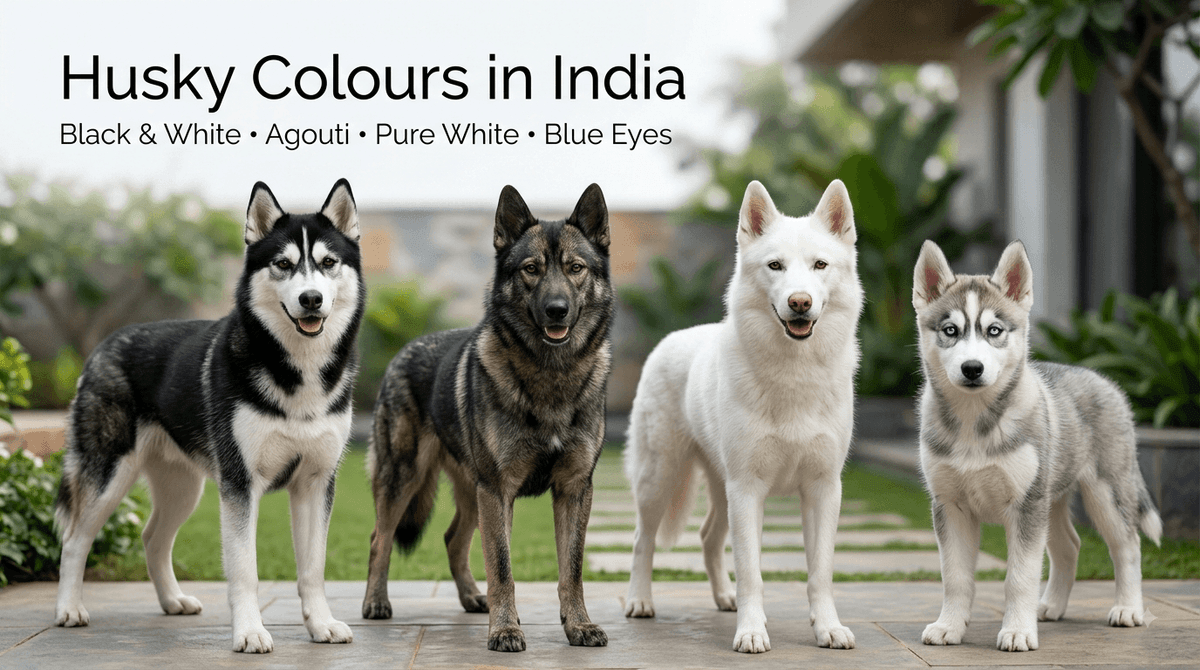
Siberian Husky Colours in India: Black & White, Agouti, White & Blue Eyes Explained
Explore Siberian Husky colours in India — black & white, agouti, pure white, and blue eyes explained. Learn what actually matters before buying.
Frequently Asked Questions
Check clear eyes, clean ears, a healthy coat and skin, strong legs, a good appetite, and confident, playful behaviour. Ask for vaccination and deworming records to confirm what you observe.