
Beagle Puppy Feeding Guide (2026): What to Feed from 2 to 12 Months

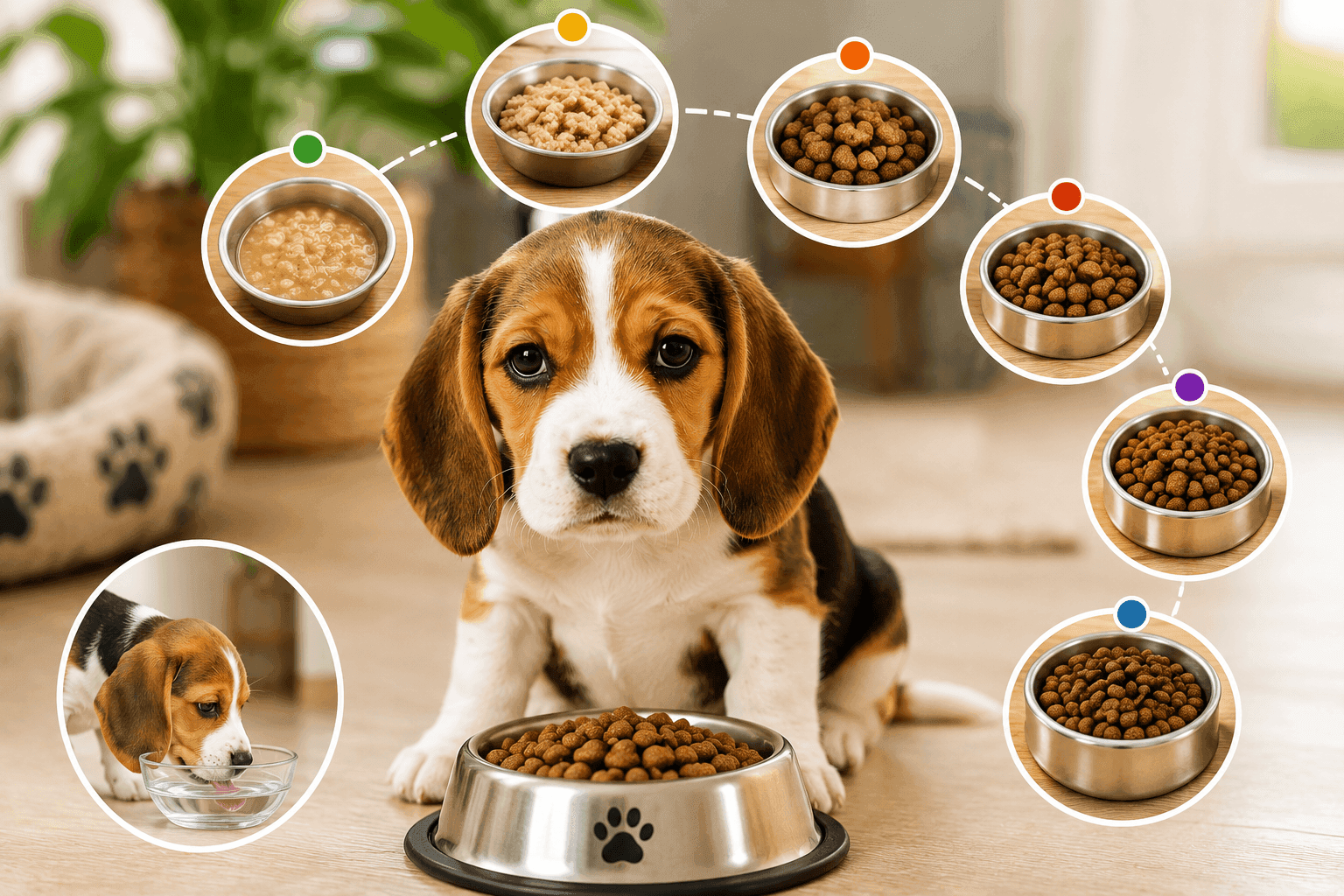
If you've just brought home a Beagle puppy, or you're about to, you already know they're food-motivated little characters who'll happily eat anything you put in front of them. That's exactly why feeding them right matters so much — Beagles don't self-regulate the way some breeds do, and what goes into their bowl in the first year shapes almost everything about their adult life.
The first twelve months are when a Beagle puppy's skeleton hardens, their immune system learns to defend itself, their gut develops the bacteria it will rely on for years, and their coat goes from puppy-soft to the dense double coat Beagles are known for. Get the nutrition wrong during this window — too little protein, poorly balanced calcium and phosphorus, erratic meal timing — and you're often dealing with the consequences well into adulthood: soft joints, poor coat condition, digestive sensitivity, or a puppy who never quite reaches the sturdy, compact build the breed is meant to have. Get it right, and you're setting up a dog that's active, lean, and resilient for the next 12–15 years.
This guide walks through exactly what to feed a Beagle puppy from 2 months to 12 months, with a month-by-month breakdown, a feeding schedule table, homemade vs commercial food comparisons, and answers to the questions we hear most often from first-time Beagle parents.
Quick Answer: What should you feed a Beagle puppy from 2 to 12 months?
Feed a high-protein, puppy-specific diet — premium puppy kibble or home-cooked meals with boiled chicken, eggs, rice, and vegetables. Start with 4 meals a day at 2 months and taper to 2 meals by 12 months. Prioritise calcium, DHA, and controlled portions to support steady bone, brain, and muscle development throughout the first year.
Understanding a Beagle Puppy's Nutritional Needs
Beagle puppies are compact but energetic, and their nutritional requirements are higher, pound for pound, than an adult dog's. Here's what actually needs to be in the bowl:
- Protein: The single most important building block for muscle, organ, and coat development. Look for real meat (chicken, fish, egg) as the first ingredient in any packaged food.
- Healthy fats & DHA: Fish oil and DHA support brain and eye development, especially in the first 4–5 months. Healthy fats also keep the coat glossy and skin from drying out.
- Calcium & phosphorus: These two need to be in the right ratio (roughly 1.2:1) for healthy bone growth. Too much calcium from supplements without veterinary guidance can actually harm joint development, so puppy-formulated food is safer than ad-hoc supplementing.
- Vitamins & minerals: Vitamin A, D, E, zinc, and iron support immunity, vision, and skin health — another reason a varied, puppy-specific diet beats a narrow home-cooked rotation.
- Fibre: Rice, pumpkin, and sweet potato support digestion and help form firm stools, which matters a lot for a breed prone to scavenging.
- Hydration: Fresh water should be available at all times. As a rough guide, puppies need about 50–60ml of water per kg of body weight daily, more in Delhi's summer heat or after exercise.
Month-by-Month Feeding Guide (2 to 12 Months)
2 to 3 Months: Weaning Onto Solid Food
At this age your Beagle puppy is newly separated from their mother and still building digestive strength. Stick to soft, easily digestible puppy kibble (soaked in warm water or puppy milk replacer) or lightly cooked home food like mashed rice with boiled chicken. Four small meals a day works best — their stomachs are still tiny, and long gaps between meals can cause hypoglycemia in toy-sized breeds like this. Watch for steady weight gain and firm (not loose) stools as your main markers of digestion going well.
4 to 6 Months: The Growth Sprint
This is when Beagle puppies grow fastest and their appetite becomes noticeably bigger. Move to three meals a day. This is also the age when teething peaks, so softer textures and appropriately sized chew toys help — more on that below. Protein and calcium needs are at their highest in this window since bone and muscle growth is happening quickly.
7 to 9 Months: Building Structure
Growth slows down slightly but doesn't stop. Most puppies can move to two to three meals a day depending on appetite and activity level. This is a good stage to start introducing more variety — vegetables, curd, and a wider range of proteins — while keeping portions consistent so you can track weight gain.
10 to 12 Months: Approaching Adulthood
By now most Beagles are close to their adult height, though they'll continue filling out for a few more months. Two meals a day is standard. Around the 12-month mark (sometimes a little earlier for very active Beagles), you can start a gradual transition to adult food using the same seven-day method described later in this guide — always confirm timing with your vet based on your puppy's individual growth.
Note: exact food quantity always depends on your individual puppy's weight, activity level, and metabolism. The amounts on packaged food labels are a starting point, not a rule — your veterinarian is the best judge of whether your puppy needs more or less.
Feeding Schedule Table
Best Foods for Beagle Puppies
A good Beagle puppy diet usually combines a quality commercial base with safe home-cooked additions:
- Premium puppy kibble: Formulated to hit the right protein-to-calcium ratio without guesswork — a reliable base for most families.
- Boiled chicken: Lean, easy to digest, and an excellent protein top-up to kibble or rice.
- Eggs: Boiled or scrambled without oil/salt — a great source of protein and biotin for coat health, 2–3 times a week.
- Fish: Boneless, cooked fish like rohu or salmon adds omega-3s for coat and joint support.
- Paneer: A good calcium and protein source in small quantities, especially useful for fussy eaters.
- Rice: Gentle on digestion and a good energy source, especially when a puppy has a mildly upset stomach.
- Pumpkin & sweet potato: Fibre-rich and naturally sweet — most Beagles love them, and they help with stool consistency.
- Carrots: Raw or lightly steamed, good for teething puppies and a decent source of vitamin A.
- Curd (plain, unsweetened): Supports gut bacteria and digestion; introduce in small amounts to check tolerance.
- Safe fruits: Apple (no seeds), banana, and watermelon in small portions make good occasional treats.
Homemade Food vs Commercial Puppy Food
Both approaches can raise a healthy Beagle — the right choice depends on your schedule, budget, and comfort with nutritional planning.
Many GoodFurs families use a hybrid approach — a quality puppy kibble as the nutritional base, with home-cooked additions like boiled chicken, curd, or vegetables for variety and enrichment.
Popular Puppy Food Brands in India
Some widely used puppy food brands among Indian pet parents include Royal Canin, Farmina, Acana, Orijen, Arden Grange, Pedigree Pro, Drools Focus, and SmartHeart. Each brand has different formulations and price points — check the protein source, protein percentage, and calcium-phosphorus ratio on the label rather than choosing on brand name alone, and consult your vet if you're unsure which suits your puppy's build and activity level.
Foods Beagle Puppies Should Never Eat
Beagles are notorious scavengers, so it's worth being extra vigilant about what's within reach:
- Chocolate and anything containing caffeine
- Grapes and raisins
- Onion and garlic (raw or cooked)
- Cooked bones that can splinter
- Xylitol (found in sugar-free gum and some peanut butters)
- Alcohol in any form
- Salty, spicy, or heavily oiled food
- Raw dough containing yeast
- Macadamia nuts
Common Feeding Mistakes First-Time Parents Make
- Overfeeding because Beagles beg persistently and rarely refuse food
- Switching foods abruptly instead of transitioning gradually
- Giving table scraps as regular meals instead of occasional, safe treats
- Free-feeding (leaving food out all day) instead of scheduled meals
- Skipping the vet check before adding home-cooked supplements to a commercial diet
- Ignoring stool consistency and energy levels as early signs of a diet mismatch
How to Transition to a New Food (7-Day Plan)
Sudden food changes are one of the most common causes of a Beagle puppy's upset stomach. Introduce any new food gradually over seven days:
If loose stools or vomiting appear at any stage, slow the transition down and hold at the previous ratio for a couple of extra days before continuing.
Feeding During Teething and Vaccination
Teething (roughly 3–6 months): Sore gums can make puppies temporarily reluctant to eat hard kibble. Soften kibble with warm water, offer chilled (not frozen) carrots or a vet-approved chew toy, and don't be alarmed by a few days of reduced appetite as new teeth come through.
Vaccination days: Mild lethargy or a smaller appetite for 24–48 hours after a vaccine is normal. Offer smaller, easily digestible meals like boiled rice and chicken, keep water easily accessible, and contact your vet if the puppy refuses food for more than two days or shows vomiting, diarrhoea, or unusual lethargy.
Maintaining a Healthy Weight
Beagles are genetically prone to weight gain even from puppyhood, so keeping an eye on body condition matters as much as the food itself:
- You should be able to feel (not see) the ribs with light pressure
- A visible waist should be noticeable when viewed from above
- Avoid feeding as a response to begging — Beagles will beg regardless of how full they are
- Keep treats to under 10% of daily food intake
- Adjust portions as activity levels change, not just by age
Signs Your Beagle Puppy Is Getting Proper Nutrition
- Steady, consistent weight gain appropriate for age
- Firm, well-formed stools
- A shiny, soft coat without excessive shedding or dry patches
- Good energy levels and normal playfulness
- Clear eyes and healthy gums
- Regular appetite without prolonged food refusal
When to Consult a Veterinarian
Reach out to your vet if you notice any of the following:
- Loss of appetite lasting more than 48 hours
- Persistent vomiting or diarrhoea
- Sudden weight loss or a bloated, hard abdomen
- Dull coat, excessive scratching, or bald patches
- Low energy that doesn't improve with rest
- Any reaction after introducing a new food
Final Thoughts
Feeding a Beagle puppy well isn't complicated, but it does need consistency — the right proportions of protein, fat, and calcium, meals on a predictable schedule, and patience with transitions. Watch your puppy's body condition and energy more than the exact numbers on any chart, and loop in your vet whenever something feels off.
If you're still deciding on your Beagle puppy, GoodFurs connects you with KCI-certified Beagle puppies from ethical, verified breeders across India. Every puppy comes healthy and vaccinated, backed by breed selection assistance, lifetime puppy care guidance, and safe home delivery — so nutrition planning like this guide starts you off on the right foot. Get in touch with GoodFurs before bringing home your Beagle puppy.
Most read






Related Blogs

How to Buy a Beagle Puppy in India: The Complete First-Time Buyer's Guide (2026)
A complete step-by-step guide to buying a healthy, KCI-certified Beagle puppy in India — what to check, ask, and avoid before you pay.

Beagle Puppy Price in India (2026): What Affects the Cost of a Purebred Beagle?
Beagle puppy prices in India start from ₹15,000. Learn what affects cost, KCI pricing, hidden fees, and how to avoid overpaying or underbuying.

Pure Beagle vs Mixed Beagle: How to Tell the Difference (2026 Guide)
Learn how to identify a pure Beagle puppy vs a mixed one — key traits, red flags, KCI documents to check, and expert buying tips for 2026.
Frequently Asked Questions
A 2-month-old Beagle should eat soft, easily digestible food — soaked puppy kibble or mashed rice with boiled chicken — spread across 4 small meals a day.