
Puppy Vaccination Schedule in India: Age-Wise Chart and Booster Guide

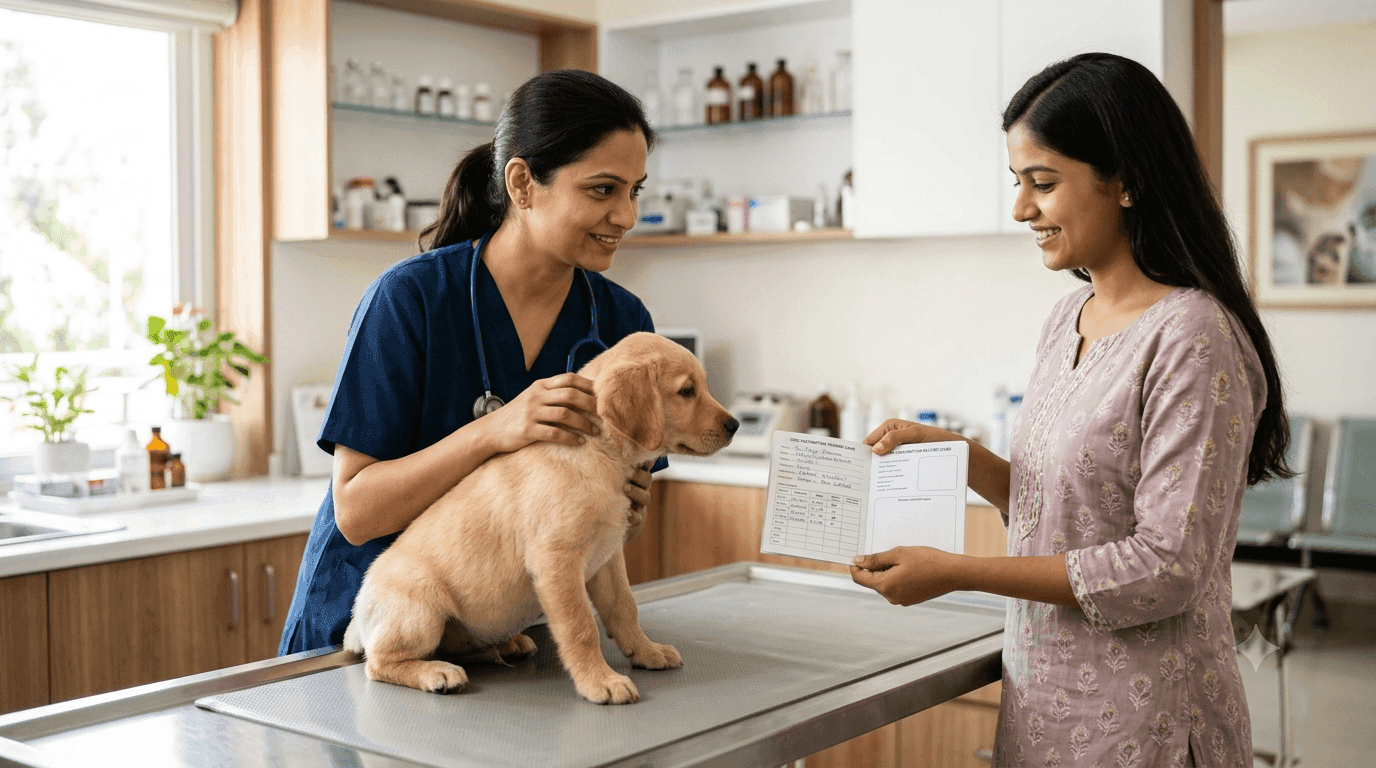
Quick answer: In India, most puppies start core vaccines at 6–8 weeks of age. They then get a repeat dose every 2–4 weeks until they are at least 16 weeks old. The first anti-rabies vaccine is usually given at 12 weeks or older. A core booster follows at 6 months or 1 year, and rabies is typically repeated every year. Your vet will adjust this plan to your puppy’s health, the vaccine brand used and its vaccination history.
Bringing home a puppy is exciting, and the vaccination card is one of the first things you’ll receive. This guide explains what each dose does, when it’s due, and how to stay on track.
Why Is Puppy Vaccination Important?
Newborn puppies get temporary protection from antibodies in their mother’s milk. These are called maternal antibodies. They fade over the first few months. While they’re present, they can also stop a vaccine from working.
Nobody knows exactly when a particular puppy’s maternal antibodies will drop, so vets give several doses a few weeks apart. The final puppy dose, at 16 weeks or older, matters most. By then, most puppies can respond fully.
Vaccination protects against diseases that are common and often fatal in India:
- Parvovirus: causes severe vomiting and bloody diarrhoea. It is very dangerous for young puppies.
- Distemper: affects the lungs, gut and nervous system.
- Rabies: fatal once symptoms appear. It is also a serious public health risk because it spreads to humans through bites.
- Leptospirosis: a bacterial infection linked to flood water and rat urine, common during the monsoon. It can also infect people.
Age-Wise Puppy Vaccination Chart (India)
Puppy age | Vaccine | Protects against | Important notes |
6–8 weeks | 1st core combination (often called DHPPi or “Puppy DP”) | Distemper, hepatitis (adenovirus), parvovirus, parainfluenza | Usually given while the puppy is still with the breeder. Deworming starts before this. |
9–12 weeks | 2nd core combination (DHPPiL, often called “9-in-1”) | Core diseases + leptospirosis | Given 2–4 weeks after the first dose. Leptospirosis needs two initial doses. |
12 weeks or older | Anti-rabies, dose 1 | Rabies | Many Indian vets add a second rabies dose 2–4 weeks later in high-risk areas. |
12–16 weeks | 3rd core combination (DHPPiL) | Core diseases + leptospirosis (2nd dose) | Given 2–4 weeks after the previous dose. |
16 weeks or older | Final puppy core dose | Core diseases | Must be given at 16 weeks or later. Don’t skip this one. |
6 months or 1 year | Core booster | Core diseases | Protects puppies whose maternal antibodies blocked earlier doses. |
Every year | Anti-rabies and leptospirosis boosters | Rabies, leptospirosis | Other core boosters may be yearly or every 3 years, depending on the vaccine and your vet. |
Vaccine names and combinations vary between brands. Some clinics use 4 or 5 visits; others use 3. Follow your vet’s card, not a fixed chart.
Core, Rabies and Optional Vaccines
Core vaccines
Core vaccines are the ones every puppy should receive, wherever it lives. Globally, they cover distemper, canine adenovirus (hepatitis) and parvovirus. In India, clinics usually give them as one combination shot that also covers parainfluenza and leptospirosis.
Rabies vaccine
India has a high rabies burden, so the anti-rabies vaccine is treated as core here. Even an indoor dog that never meets strays can be exposed. It could be bitten at the vet, catch a bat, or slip out through the gate.
Rabies vaccination also matters for paperwork. Many civic bodies, including the Municipal Corporation of Delhi, ask for an anti-rabies vaccination certificate when you register your pet. Check the rules in your city.
Optional (lifestyle) vaccines
Vaccine | Who may need it |
Kennel cough (Bordetella) | Dogs that board or go to daycare, groomers or dog parks |
Canine coronavirus | Offered by some Indian clinics, but global guidelines don’t class it as core. Ask your vet. |
Your vet decides on these after considering your puppy’s lifestyle and local disease risk.
How Much Does Puppy Vaccination Cost in India?
Prices vary by city, clinic and brand. As a real-world reference, one national pet clinic chain listed these prices in 2026:
Vaccine | Listed price per dose (₹) |
Puppy DP | 849 |
DHPPiL (9-in-1) | 899–999 |
Anti-rabies | 699 |
Canine coronavirus | 899 |
Kennel cough | 1,349 |
Full puppy package (9 doses) | 6,499 |
Government veterinary hospitals and municipal camps usually charge much less. Premium clinics may charge more.
What changes the price:
- Vaccine brand: imported brands often cost more.
- City and clinic type: metro and private hospitals charge more than government clinics.
- Consultation fee: some clinics charge it separately, while others include it.
- Optional vaccines: the more your vet recommends, the higher the total.
Vaccination Records, Boosters and Missed Doses
Keep your vaccination card safe
Every dose on the card should show the date, vaccine name, batch sticker and the vet’s signature or stamp. You’ll need this card for:
- Municipal pet registration
- Boarding, daycare and grooming
- Train or air travel
- Your next vet if you move cities
Take a photo of each page so you always have a backup.
What happens if a dose is missed?
Don’t panic, and don’t restart the whole course on your own. Call your vet. In most cases they will give the next dose as soon as possible and continue the schedule from there. A puppy older than 16 weeks with an unknown vaccination history may need fewer doses than a young puppy. Your vet will decide.
When can my puppy go outside?
Outdoor walks on public ground are safest once your vet confirms the puppy series is complete. This is usually 1–2 weeks after the final dose. Until then:
- Carry your puppy outside so it can see and hear the world.
- Avoid parks, society lawns and spots where unknown dogs toilet.
- Let it meet only healthy, fully vaccinated dogs you know.
Early socialisation still matters during this period. Our week-by-week puppy socialisation guide shows how to do it safely at home.
Common Puppy Vaccination Mistakes
- Stopping at 12 weeks. The final dose must be given at 16 weeks or older.
- Giving doses too close together. A gap shorter than 2 weeks isn’t effective.
- Skipping rabies for indoor dogs. It’s essential in India, whatever your dog’s lifestyle.
- Vaccinating a sick puppy. Tell your vet about any fever, diarrhoea or poor appetite before the shot.
- Buying a puppy without records. Ask for a stamped vaccination and deworming card before you pay. Learn how to spot a verified dog breeder.
- Forgetting the 6-month or 1-year booster. Set a phone reminder on the day of the last puppy shot.
Conclusion
A good puppy vaccination schedule in India comes down to three things:
- Start at 6–8 weeks.
- Repeat every 2–4 weeks until at least 16 weeks.
- Never miss rabies or the first booster.
Keep the card safe and let your vet tailor the plan.
If you’re still choosing a puppy, start with the paperwork. Every puppy listed on GoodFurs comes from a verified breeder, with vaccination and deworming records you can check before you pay. Browse puppies from verified breeders, or call or WhatsApp +91 8779692292 to ask about a puppy’s health records.
Most read



Related Blogs
Tick and Flea Prevention for Dogs in India: Signs, Treatment and Safety
Learn tick and flea prevention for dogs in India: early signs, safe tick removal, treatment options and when to see a vet. A practical guide for pet parents.
How to Spot a Verified Dog Breeder in India (Red Flags Checklist)
Learn how to verify a genuine dog breeder in India, spot red flags, check puppy health records, and safely buy a puppy with confidence.
Frequently Asked Questions
Most puppies get their first core vaccine between 6 and 8 weeks of age.