
How to Socialise a Puppy: A Week-by-Week Guide for the First 3 Months

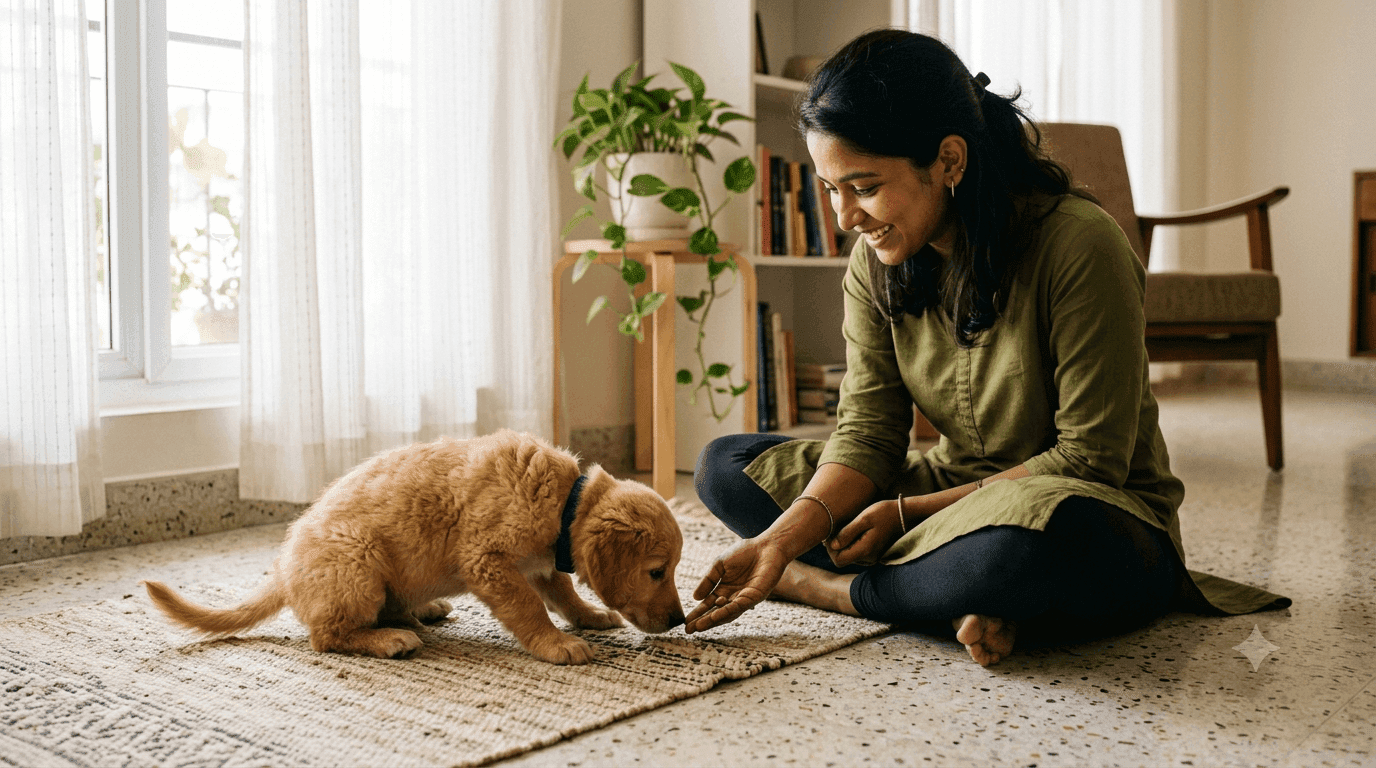
Your new puppy hides when the pressure cooker whistles and backs away from visitors. That’s common, and you can help.
To socialise a puppy, give it short, positive experiences with people, sounds, places, handling and other animals. Keep each one at a level where your puppy stays relaxed. Let it choose to approach, reward calm curiosity, and step back when it looks worried.
What Is Puppy Socialisation?
Puppy socialisation teaches a young puppy that everyday life is safe. Examples include the doorbell, visitors, traffic, the lift, grooming and vet visits. It is different from obedience training. Socialisation builds comfort, while training teaches cues like sit and stay. If you’re also dealing with nipping, see our guide on how to stop puppy biting.
The American Veterinary Society of Animal Behavior calls the first three months the most important window for socialisation. Good socialisation improves the odds of a confident adult dog, but it can’t guarantee one. Genetics, health and training matter too.
Puppy Socialisation Timeline: Week by Week
In India, puppies can’t be sold before eight weeks of age under the Dog Breeding and Marketing Rules, 2017. So the breeder handles the early weeks, and your part starts at week 8.
| Age | Focus |
|---|---|
| Weeks 1–3 | Breeder and mother: warmth, nursing, gentle handling |
| Weeks 4–5 | Breeder: soft household sounds, safe surfaces, familiar people |
| Weeks 6–7 | Breeder: brief new objects, gentle brushing, short play |
| Weeks 8–9 | You: settling in, routine, family members |
| Weeks 10–11 | You: calm visitors, new sounds, safe dog meetings if your vet agrees |
| Week 12 | You: repeat what went well and keep going |
Weeks 8–9: Settling in. Before delivery day, use our home preparation checklist to get your space ready. Once your puppy arrives, set a simple daily routine for meals, naps, toilet breaks and play. Let family members sit on the floor so the puppy comes to them, and introduce a collar or harness for a few minutes at a time. Skip a house full of guests in the first week.
Weeks 10–11: Building confidence. Invite one calm visitor at a time and ask them to sit and let the puppy approach. Play gentle handling games that copy a vet check. Introduce sounds like the mixer from another room first, then closer. If your vet approves, arrange a meeting with a known, healthy, fully vaccinated adult dog on clean ground.
Week 12: Consolidating. Repeat the experiences your puppy already enjoys. Practise calm watching of the outside world, and add short spells of resting alone with a chew toy. Socialisation doesn’t end here, so keep going through the first year.
Can You Socialise a Puppy Before Full Vaccination?
Yes, carefully. The WSAVA vaccination guidelines place the final puppy core dose at 16 weeks or older. That is after the main socialisation window closes, so waiting until then means missing it.
Until your vet clears outdoor walks:
- Carry your puppy outside so it can watch and listen.
- Sit together on a clean balcony.
- Invite calm visitors home.
- Practise handling indoors.
Avoid dog parks, society lawns, unknown dogs and ground used by many dogs. One vaccine dose doesn’t make every place safe. Ask your vet when your puppy can walk on public ground in your area.
How to Socialise a Puppy at Home in India
Most socialising can happen inside your home and building:
- Lifts: Stand near the lift with your puppy in your arms and give a treat when the doors open. If you live in a flat, our apartment living guide has more tips.
- Doorbell and visitors: Ring the bell, then toss a treat. Ask guests to sit quietly and let the puppy come to them.
- Pressure cooker, mixer, TV: Start with the sound in another room and move closer over several days.
- Traffic and construction: Watch from a balcony for a few minutes at a time.
- Monsoon: Let your puppy walk on a damp towel at home before it meets puddles outside.
- Delivery staff: Let the puppy watch calmly from behind you, with no forced contact.
Festival fireworks and loud wedding bands are not socialisation. On those nights, close the windows and give your puppy a quiet place to hide.
Signs Your Puppy Is Comfortable or Overwhelmed
| Comfortable | Overwhelmed |
|---|---|
| Loose body, sniffing, exploring | Freezing, hiding, trembling |
| Approaches by choice | Tries to escape |
| Takes treats | Refuses favourite treats |
| Recovers quickly | Stays worried long after |
If your puppy looks overwhelmed:
- Increase the distance from whatever worried it.
- Lower the intensity, such as a quieter sound or fewer people.
- Try again another day.
Never punish fear. If it continues, speak to your vet about a reward-based behaviour professional.
Breed and Individual Differences
Every puppy develops at its own pace. Breed can influence some behaviours, but it doesn’t decide temperament on its own. Our Golden Retriever temperament guide shows how genetics, bloodline and early socialisation work together.
Conclusion
Socialising a puppy comes down to small, calm, positive experiences repeated often, at your puppy’s pace. If you’re still choosing the right companion, compare breed temperament and care needs or ask our puppy experts about a puppy’s health records and how it has been raised so far.
Most read





Related Blogs

How to Buy a Dog Online in India: Step-by-Step Guide 2026
Learn how to buy a dog online in India safely. Check breed, health, vaccination, KCI documents, pricing and puppy delivery before buying.
Frequently Asked Questions
Socialisation starts with the breeder and continues from the day the puppy comes home, usually at eight weeks in India. The first three months matter most.