
German Shepherd Feeding Chart by Age in India: What to Feed at Every Stage

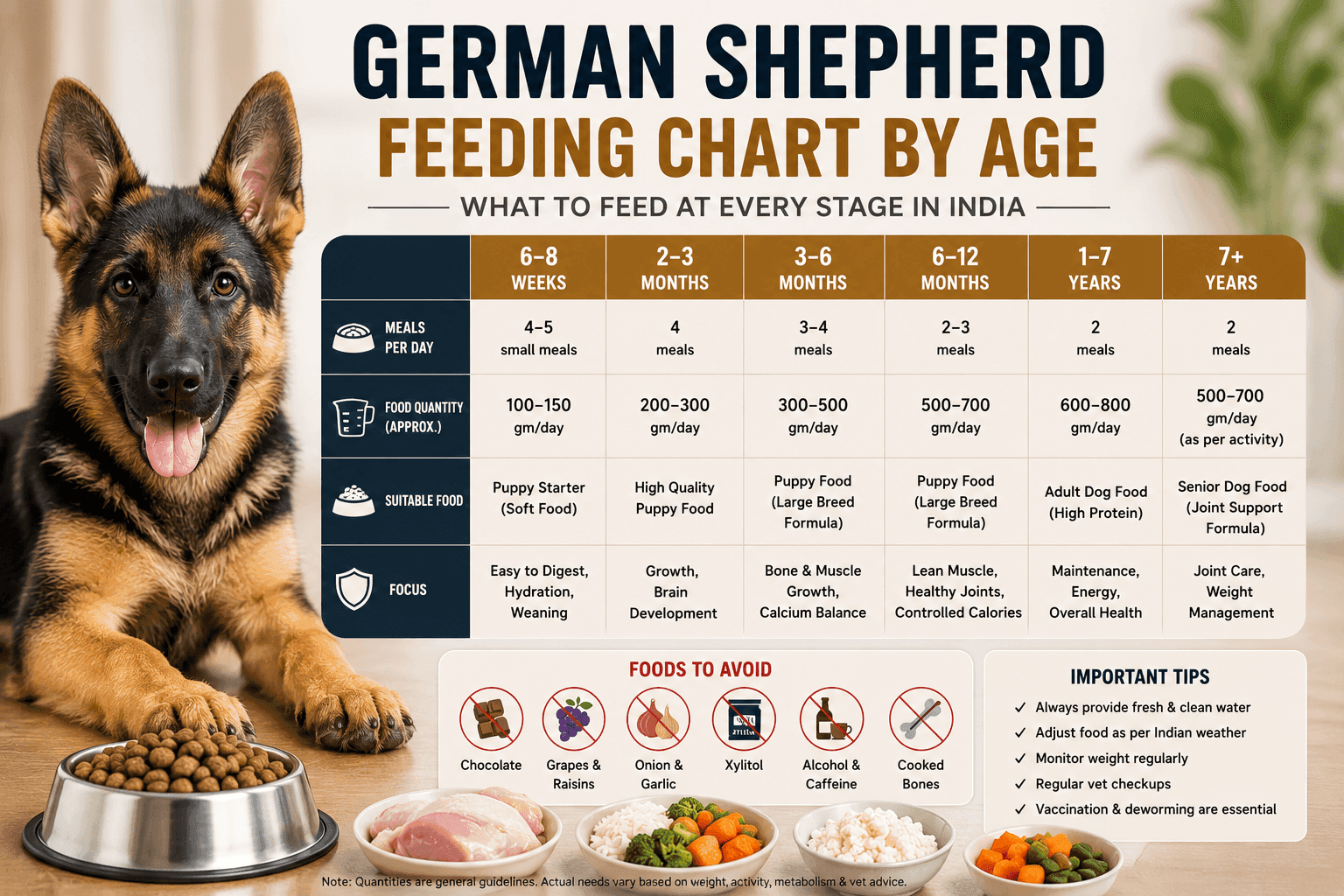
Ask five German Shepherd owners how much food their dog should eat, and you'll probably hear five different answers. That's because there isn't a single feeding plan that works for every German Shepherd. A growing puppy, an energetic adult, and a senior companion all have different nutritional needs, and feeding the same type or quantity of food throughout their lives can do more harm than good.
German Shepherds are a large, active breed that grows rapidly during the first year. Their diet doesn't just influence their size—it affects bone development, muscle strength, immunity, digestion, and even how well they learn during training. The right nutrition at the right age lays the foundation for a healthy life.
Whether you've recently welcomed a puppy or you're planning to explore German Shepherd Puppies for Sale, this guide will help you understand how nutrition changes with age and how to build a healthy feeding routine from day one.
Quick Answer:
What Should You Feed a German Shepherd at Different Ages?
A German Shepherd's diet should change as it grows. Young puppies need frequent meals with high-quality protein, healthy fats, and DHA to support rapid growth. Adult dogs require balanced meals that maintain muscle and energy, while senior dogs benefit from easily digestible food with joint-supporting nutrients. Feeding quantity should always be adjusted according to your dog's weight, activity level, and your veterinarian's advice.
| Age | Meals Per Day | Recommended Food |
|---|---|---|
| 6–8 Weeks | 4–5 | Soft puppy starter food |
| 2–3 Months | 4 | Large-breed puppy food |
| 3–6 Months | 3–4 | Premium puppy diet |
| 6–12 Months | 2–3 | Growth formula |
| 1–7 Years | 2 | Balanced adult diet |
| 7+ Years | 2 | Senior diet with joint support |
Why Feeding Changes at Every Stage
A German Shepherd grows much faster than many other dog breeds. During the first year, the body is constantly building muscles, strengthening bones, and developing joints. As growth slows, the body's nutritional priorities shift from development to maintenance, and later to healthy ageing.
That's why age-specific feeding is so important. Overfeeding a puppy may increase the risk of joint problems, while underfeeding an active adult can affect energy levels and muscle condition. A senior German Shepherd, on the other hand, often needs fewer calories but more support for digestion and mobility.
Instead of focusing only on how much food goes into the bowl, think about whether every meal meets your dog's needs at that stage of life.
Understanding German Shepherd Nutritional Needs
A balanced diet is more than just protein. Every meal should provide the right mix of nutrients to support healthy growth and long-term wellbeing.
Protein
Protein helps build lean muscle, repair tissues, and strengthen the immune system. Chicken, fish, lamb, eggs, and turkey are excellent sources for a growing German Shepherd puppy.
Healthy Fats
Healthy fats provide energy and keep the skin and coat in good condition. DHA, commonly found in fish oil, also supports brain and eye development during puppyhood.
Calcium & Phosphorus
Large-breed puppies need the right balance of calcium and phosphorus—not extra amounts. Too much calcium can interfere with normal bone growth, so avoid supplements unless your veterinarian recommends them.
Carbohydrates & Fibre
Ingredients such as rice, oats, pumpkin, and sweet potato provide energy and support healthy digestion. Fibre also helps maintain good gut health, which is particularly important for German Shepherds with sensitive stomachs.
Water
Fresh drinking water should always be available. During hot summers in cities like Delhi, Ahmedabad, or Hyderabad, dogs may need more water and slightly adjusted feeding times to stay comfortable.
German Shepherd Feeding Chart by Age
The chart below provides general feeding guidance. Every dog is different, so adjust portions according to body weight, activity level, metabolism, and veterinary advice.
| Age | Meals | Food Quantity* | Recommended Diet | Main Focus |
|---|---|---|---|---|
| 6–8 Weeks | 4–5 | Small frequent meals | Puppy starter food | Weaning & digestion |
| 2–3 Months | 4 | Increase gradually | Large-breed puppy food | Growth & immunity |
| 3–6 Months | 3–4 | Moderate portions | High-protein puppy diet | Bone & muscle development |
| 6–12 Months | 2–3 | Based on weight | Growth formula | Controlled growth |
| 1–7 Years | 2 | According to activity | Adult maintenance diet | Healthy weight |
| 7+ Years | 2 | Slightly reduced if needed | Senior formula | Joint & digestive health |
*Food quantity is only a general guideline. Always refer to your veterinarian and the feeding recommendations provided by your dog's food manufacturer.
Feeding Guide: 6–8 Weeks
The first few weeks after bringing your puppy home are all about helping it settle into a consistent routine. At this age, puppies are transitioning from their mother's milk to solid food, so meals should be soft, easy to digest, and served four to five times a day.
Choose a high-quality large-breed puppy starter food and soften it with warm water if needed. Feed small portions at regular intervals rather than leaving food available throughout the day. This helps establish healthy eating habits and makes it easier to monitor your puppy's appetite.
Feeding Guide: 2–3 Months
Between two and three months, your German Shepherd enters a rapid growth phase. Appetite increases, bones begin developing quickly, and the brain continues to mature. This is the ideal time to focus on a nutrient-rich diet rather than simply increasing portion sizes.
Feed four balanced meals a day using a premium large-breed puppy formula rich in animal protein, DHA, and balanced minerals. These nutrients help support healthy muscle growth, brain development, and a strong immune system.
Many owners in India also like to include homemade meals. That's perfectly fine, provided they're nutritionally balanced. Feeding only rice and chicken every day isn't enough, as growing puppies require a wide range of vitamins and minerals. Along with good nutrition, ensure your puppy stays up to date with its Puppy Vaccination Guide and deworming schedule for healthy development.
Feeding Guide: 3–6 Months
This is one of the most active stages of your puppy's life. Growth continues at a steady pace, permanent teeth begin appearing, and daily exercise naturally increases. Most puppies can now move to three or four meals a day, with portion sizes adjusted gradually as they gain weight.
Protein remains essential during this stage, but controlled growth is just as important. Avoid overfeeding or giving extra calcium supplements without veterinary advice, as excessive nutrition can place unnecessary stress on developing joints.
Regular play, short walks, and a consistent feeding schedule work together to support healthy development. Along with good nutrition, ensure your puppy stays up to date with vaccinations and deworming, as these are equally important for healthy growth.
Feeding Guide: 6–12 Months
By six months, your German Shepherd starts looking more like a young adult, but its body is still developing. Bones continue to strengthen, muscles become more defined, and daily activity increases. This is the stage where many owners accidentally overfeed because the puppy seems hungry all the time.
Most German Shepherds can now eat two to three meals a day. Instead of increasing food dramatically, adjust portions based on your puppy's body condition and exercise routine. You should be able to feel the ribs without seeing them prominently.
A premium large-breed puppy food remains the best choice until your veterinarian recommends switching to an adult diet. During this stage, regular walks, obedience training, and play sessions help convert calories into healthy muscle instead of excess fat.
Adult German Shepherd Diet (1–7 Years)
Once your German Shepherd reaches adulthood, the focus shifts from growth to maintaining a healthy body weight, strong muscles, and consistent energy levels.
Most adult German Shepherds do well with two balanced meals a day. Their diet should include high-quality animal protein, healthy fats, digestible carbohydrates, fibre, vitamins, and minerals. Fresh drinking water should always be available.
Keep in mind that calorie requirements differ from dog to dog. A working German Shepherd involved in security work or agility training will naturally need more calories than a family pet living a relatively relaxed lifestyle.
Regular weight checks are a simple way to ensure your dog isn't becoming overweight. Even a few extra kilograms can place unnecessary pressure on the hips, knees, and spine over time.
Senior German Shepherd Diet (7+ Years)
As German Shepherds grow older, their metabolism slows and physical activity usually decreases. While they may not require as many calories, they still need a nutrient-rich diet that supports healthy ageing.
Senior diets often contain ingredients such as glucosamine, chondroitin, and Omega-3 fatty acids to help maintain joint health. Easily digestible proteins and moderate fibre can also support digestion, which becomes more sensitive with age.
If your senior dog has arthritis, kidney disease, diabetes, or any other medical condition, always follow your veterinarian's dietary recommendations instead of making changes on your own.
Homemade Food vs Commercial Dog Food
Many Indian pet parents wonder whether homemade food is better than packaged dog food. The truth is that both options can work, provided they meet your German Shepherd's nutritional requirements.
| Homemade Food | Commercial Food |
|---|---|
| Fresh ingredients chosen by the owner | Scientifically balanced nutrition |
| Can be customised for individual dogs | Convenient and easy to measure |
| Requires careful planning to avoid deficiencies | Consistent nutrient levels in every meal |
| Takes time to prepare daily | Saves preparation time |
| May require supplements under veterinary guidance | Usually complete without additional supplements |
If you choose homemade food, include quality protein, vegetables, healthy carbohydrates, and appropriate supplementation when recommended. Simply feeding rice, roti, or chicken alone does not provide complete nutrition.
Foods Your German Shepherd Should Never Eat
Some everyday foods that are safe for humans can be dangerous—or even life-threatening—for dogs.
Avoid feeding:
- Chocolate
- Grapes and raisins
- Onion
- Garlic
- Xylitol (found in sugar-free products)
- Alcohol
- Caffeine
- Excess salt
- Cooked bones
- Raw bread dough
These foods may cause digestive problems, poisoning, kidney damage, or choking hazards. If your German Shepherd accidentally eats any toxic food, contact your veterinarian immediately instead of waiting for symptoms to appear.
Common Feeding Mistakes to Avoid
Even experienced owners can make small feeding mistakes that affect their dog's long-term health.
Some of the most common ones include:
Feeding Too Many Treats
Treats are useful for training, but they should make up only a small part of your dog's daily calorie intake. Too many treats can quickly lead to unnecessary weight gain.
Switching Food Too Quickly
A sudden change in diet often causes diarrhoea or stomach upset. Introduce new food gradually over 7–10 days by mixing it with the current diet.
Free Feeding
Leaving food available all day makes it difficult to monitor appetite and portion sizes. Scheduled meals help establish a healthy routine and make it easier to notice changes in eating habits.
Giving Adult Food Too Early
Large-breed puppy food is specially formulated to support controlled growth. Switching to adult food before your puppy has fully developed may reduce the intake of nutrients needed during this important stage.
Ignoring Water Intake
A balanced diet means little without proper hydration. Clean your dog's water bowl daily and refill it with fresh water several times a day, especially during hot weather.
Using Supplements Without Veterinary Advice
Extra calcium, vitamins, or protein powders are not always beneficial. In fact, unnecessary supplementation may do more harm than good for growing puppies.
Myth vs Fact: German Shepherd Feeding
Many feeding myths can do more harm than good. Here's what every German Shepherd owner should know.
| Myth | Fact |
|---|---|
| A hungry puppy should be fed as much as it wants. | Puppies have big appetites, but overfeeding can lead to unhealthy weight gain and joint problems. Stick to an age-appropriate feeding schedule and recommended portions. |
| Homemade food is always healthier than commercial food. | Both can be excellent choices if they're nutritionally balanced. The quality and completeness of the diet matter more than whether it's homemade or packaged. |
| Large German Shepherds need extra calcium supplements. | A balanced large-breed puppy diet already provides the right calcium and phosphorus levels. Give supplements only if your veterinarian recommends them. |
| Milk is good for every German Shepherd. | Many German Shepherds are lactose intolerant after weaning. Fresh drinking water is a healthier and safer choice than regular cow's milk. |
| Changing dog food overnight is fine. | Sudden diet changes can upset your dog's stomach. Always introduce new food gradually over 7–10 day |
Feeding Tips for Different Seasons in India
A German Shepherd's appetite can change with the weather, so small adjustments throughout the year can help maintain comfort and health.
Summer
During hot months, many dogs naturally eat less during the afternoon. Feed larger meals in the early morning or evening when temperatures are cooler, and ensure fresh drinking water is always available.
Monsoon
Humidity increases the risk of food spoiling quickly. Avoid leaving food in the bowl for long periods, and keep feeding bowls clean and dry to reduce bacterial growth.
Winter
Some dogs become more active during cooler weather and may require slightly more calories. Continue monitoring body weight instead of increasing food automatically.
Summer Feeding Tip: During hot Indian summers, many German Shepherds naturally eat less in the afternoon. Offering meals early in the morning or later in the evening, when temperatures are cooler, can help improve appetite while reducing the risk of heat stress.
Why a Healthy Diet Starts with a Healthy Puppy
Even the best feeding routine cannot compensate for poor breeding practices or an unhealthy start in life.
When choosing a German Shepherd puppy, look beyond appearance. A responsibly bred puppy should receive proper health checks, age-appropriate vaccinations, regular deworming, and early socialisation before joining a new family.
At GoodFurs, we work with ethical breeders who prioritise the health and welfare of every puppy. Our KCI Certified German Shepherd puppies are raised with responsible breeding standards, and families also receive expert puppy consultation, breed guidance, and safe home delivery across India.
A healthy puppy, combined with balanced nutrition and regular veterinary care, gives your companion the strongest possible foundation for a long, active life.
Conclusion
Feeding your German Shepherd the right diet at every stage of life is key to supporting healthy growth, strong muscles, better digestion, and long-term well-being. Follow an age-appropriate feeding routine, monitor your dog's body condition, and consult your veterinarian whenever dietary changes are needed.
If you're planning to bring a German Shepherd home, start with a healthy foundation. Explore GoodFurs for KCI Certified German Shepherd puppies, expert guidance, and trusted resources to help you raise a happy, healthy companion.
Most read






Frequently Asked Questions
The amount depends on your puppy's age, body weight, activity level, and the calorie content of its food. Younger puppies usually need four to five small meals a day, while older puppies gradually transition to two or three meals. Instead of focusing only on quantity, monitor your puppy's body condition and growth. Your veterinarian can help adjust portions as your puppy develops.