
Is a Siberian Husky Suitable for Indian Climate? Complete Guide for First-Time Owners

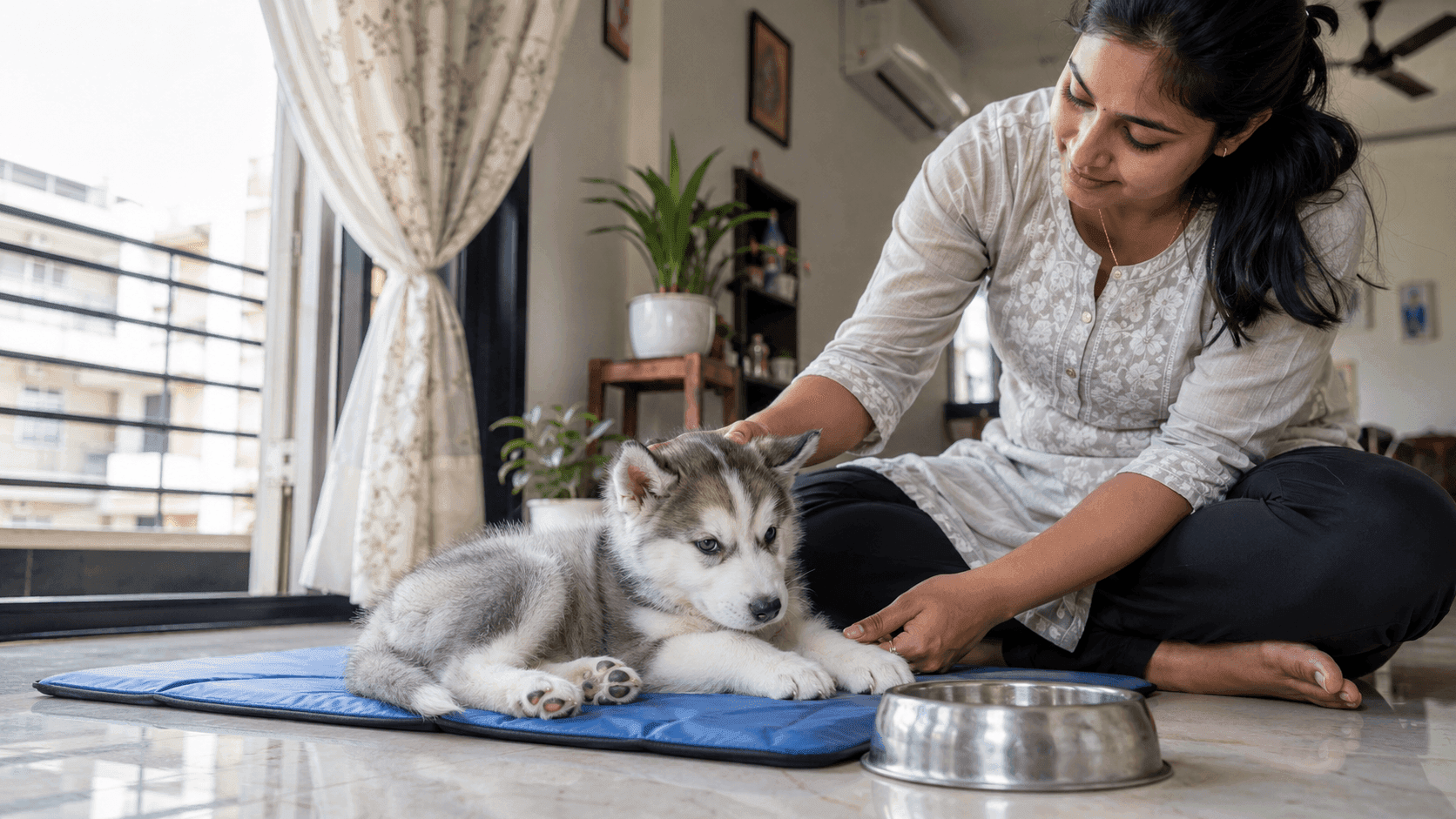
Meera saw a Siberian Husky puppy online and immediately imagined bringing it home. The puppy had a thick grey-and-white coat, expressive eyes and the playful confidence that makes the breed so attractive.
Then she looked outside at the afternoon heat and asked the question that every responsible buyer should consider:
Can a dog developed for cold regions actually live comfortably in an Indian city?
A Siberian Husky can live in some Indian homes, but the breed is not naturally suited to India’s hot climate. Safe ownership requires dependable indoor cooling, carefully timed exercise, constant access to water, regular grooming, veterinary guidance and a family capable of meeting the breed’s physical and mental needs.
The answer therefore depends on the city, home, individual dog and owner—not simply on whether an air-conditioner is available.
Before deciding, understand the breed’s activity, shedding, training and temperament through the complete Siberian Husky breed guide.
Why Is Indian Climate Challenging for a Siberian Husky?
Siberian Huskies were developed as active working dogs in cold environments. They have a dense double coat and substantial exercise requirements. The American Kennel Club describes them as athletic working dogs that need regular physical and mental activity, secure handling and reliable exercise.
Indian conditions can be challenging because of:
- High summer temperatures
- Coastal humidity
- Hot roads and concrete surfaces
- Long warm seasons
- Limited cool outdoor hours
- Power cuts
- Poorly ventilated apartments
- Urban pollution
- Reduced opportunity for safe daytime exercise
A Husky’s suitability cannot be decided by saying either “Huskies cannot live in India” or “Huskies adjust anywhere.” Some may live successfully in carefully managed homes, while others may struggle because of age, health, housing or climate.
How Does a Siberian Husky’s Double Coat Work?
A Husky’s double coat contains two layers.
The undercoat
The soft, dense undercoat provides insulation and changes through seasonal shedding. Loose undercoat needs regular removal through brushing so that it does not become compacted or matted.
The outer coat
The longer outer hairs help protect the skin from weather, dirt and sunlight. Removing both coat layers does not automatically create a cooler dog.
Routine shaving is generally discouraged for healthy double-coated dogs because it can disrupt regrowth and increase skin or sun-exposure concerns. Regular brushing removes dead coat and supports airflow without removing the coat’s protective function.
Coat clipping may still be required for a medical or specific grooming reason, but it should follow veterinary or experienced professional guidance.
Can a Siberian Husky Live Without Air Conditioning in India?
In many hot Indian homes, dependable temperature management may be essential during summer. However, air conditioning is not the only factor, and it does not eliminate all risk.
Whether a Husky can remain comfortable depends on:
- City temperature and humidity
- Home ventilation
- Direct sunlight
- Floor temperature
- Age and health
- Body condition
- Hydration
- Exercise schedule
- Access to cool rooms
- Power reliability
Helpful measures include:
- A shaded, ventilated indoor room
- Curtains or blinds blocking direct sun
- Multiple bowls of fresh water
- Cooling mats
- Fans where appropriate
- Limited exposure to warm balconies
- Temperature monitoring
- A backup cooling plan
Do not leave the dog directly under extremely cold airflow for extended periods. Cooling products also require supervision and cannot make unsafe exercise or prolonged heat exposure safe.
What Indoor Temperature Is Safe for a Siberian Husky?
There is no single indoor temperature that guarantees safety for every Husky.
Heat tolerance varies according to the dog’s age, weight, fitness, health, hydration, coat condition, activity and the room’s humidity. A temperature tolerated while resting may become unsafe during active play.
Observe the individual dog. Heavy panting at rest, repeated movement towards cooler surfaces, drooling, agitation or reduced responsiveness can indicate that the environment or activity level needs attention.
Ask a veterinarian familiar with the dog and local climate to recommend a personalised cooling plan.
How Do Different Indian Cities Affect Husky Ownership?
| City or region | Main climate challenge | Seasonal concern | Typical planning need | Safer exercise window | Difficulty level |
|---|---|---|---|---|---|
| Delhi NCR | Extreme summer heat and hot surfaces | Heatwaves and pollution | Reliable cooling and power backup | Very early morning and late evening | Very high |
| Mumbai | Heat with high humidity | Monsoon moisture | Cooling, drying and skin care | Early morning and later evening | Very high |
| Bangalore | Warm periods despite milder reputation | Hot apartments and changing summers | Home-specific ventilation and cooling | Early morning and evening | Moderate to high |
| Pune | Hot, dry summer periods | Seasonal temperature variation | Summer cooling and adjusted walks | Early morning and evening | High in summer |
| Hyderabad | Prolonged intense heat | Hot, dry summer | Strong cooling and restricted daytime activity | Before sunrise and after heat subsides | Very high |
| Chennai | Persistent heat and humidity | Limited cool periods | Continuous climate management | Only during cooler hours | Very high |
| Kolkata | Heat and high humidity | Humid summer and monsoon | Cooling and coat-drying care | Early morning and evening | Very high |
| Cooler hill regions | Lower temperatures | Seasonal rain or cold | Secure housing, vet access and exercise | Depends on local conditions | Potentially easier |
The difficulty level is only a planning indicator. A poorly ventilated home in a milder city may be less suitable than a carefully managed home elsewhere.
Can a Siberian Husky Live in Delhi NCR?
Delhi NCR creates one of the most demanding environments for a Husky because summers can be extreme, buildings and roads retain heat, and safe outdoor periods may become very short. Delhi’s government describes the region as having very hot summer conditions, while official forecasts and advisories regularly address heatwave preparedness.
Owners in Delhi, Noida, Gurugram, Ghaziabad and Faridabad would realistically need:
- Dependable indoor cooling
- Backup power arrangements
- Pre-sunrise and late-evening walks
- Indoor training and enrichment
- Hydration monitoring
- Hot-pavement awareness
- Plans for poor-air-quality days
Winter may permit more comfortable exercise, but summer preparation must be treated as a daily responsibility.
Families who have assessed these requirements can review Siberian Husky puppies available in Delhi NCR and ask specifically about the puppy’s current environment and climate-care routine.
Can a Siberian Husky Live in Mumbai?
Mumbai’s challenge is not only heat—it is the combination of warmth and humidity. High humidity can reduce the effectiveness of evaporative cooling through panting, making apparently moderate temperatures feel more demanding during exercise. Heatstroke can develop more quickly in humid or poorly ventilated environments.
Owners in Mumbai, Navi Mumbai and Thane must also manage:
- Wet undercoat during monsoon
- Slow coat drying
- Matting
- Skin irritation
- Ear and paw moisture
- Limited cool outdoor hours
- Indoor humidity and ventilation
Buyers can explore Husky puppies in Mumbai, but should first confirm that they can maintain reliable indoor comfort throughout both summer and monsoon.
Can a Siberian Husky Live in Bangalore?
Bangalore may feel more manageable than several hotter metros during parts of the year, but the city should not automatically be labelled “Husky-friendly.”
A top-floor flat in Whitefield or Electronic City with strong afternoon sun may become warmer than a shaded, ventilated home elsewhere. Conditions can also differ across HSR Layout, Koramangala, Indiranagar and Hebbal.
Evaluate:
- Sun exposure
- Floor level
- Cross-ventilation
- Power reliability
- Exercise routes
- Indoor resting temperature
- Access to veterinary care
Buyers who have assessed their actual home—not only Bangalore’s historical climate reputation—can compare available Siberian Husky puppies in Bangalore.
Can a Siberian Husky Live in Pune?
Pune has meaningful seasonal variation, but April and May can be particularly hot. Official district information notes that summer conditions can become severe, even though some western parts of the district remain cooler than eastern areas.
Owners in Pune, Pimpri-Chinchwad, Wakad, Baner, Hinjewadi and Kharadi should assess:
- Apartment ventilation
- Afternoon sunlight
- Summer electricity usage
- Safe walking routes
- Power backup
- Indoor enrichment options
The city may be easier during cooler months, but that does not reduce summer responsibilities. Suitable families can review Siberian Husky puppies available in Pune.
Before choosing a city listing, speak with a breed-selection consultant and discuss the actual home environment, daily schedule and cooling backup—not only puppy availability.
Which Indian Climate Is More Comfortable for a Husky?
Cooler hill regions and places with longer mild seasons may be easier than hot, humid coastal cities. However, a cooler location does not automatically provide a suitable home.
Owners must still consider:
- Veterinary access
- Secure housing
- Daily exercise
- Parasite prevention
- Monsoon conditions
- Travel stress
- Seasonal changes
- Local animal regulations
A Husky should not be kept outdoors simply because the weather is cooler. It remains a social dog that requires interaction, training and secure family living.
How Should You Care for a Husky During Indian Summer?
Schedule walks during cooler hours
Exercise early in the morning and later in the evening. Decide the duration according to current heat, humidity, age and fitness.
Check the ground before walking
Place the back of your hand briefly against the surface. If it feels uncomfortably hot for your hand, choose a shaded route or postpone the walk.
Keep water available
Provide clean water in multiple accessible places and carry water during outings. Do not force the dog to drink excessive quantities at once.
Create a cool resting zone
Use shade, airflow, curtains and a suitable cooling mat. Monitor the dog rather than assuming the room is cool enough.
Reduce intense activity
Avoid running, cycling or vigorous play during warm periods. Puppies need age-appropriate exercise and should not follow adult endurance routines.
Replace outdoor exercise with enrichment
Use:
- Food puzzles
- Sniffing games
- Short training sessions
- Safe chew activities
- Hide-and-seek
- Controlled indoor play
Never leave a Husky in a parked vehicle
A parked vehicle can become dangerously hot very quickly, even when the outside temperature does not feel extreme.
Prepare for power cuts
Keep a realistic backup plan:
- Inverter or backup power
- Access to another cool location
- Trusted family contact
- Safe transport arrangement
- Nearby emergency veterinary facility
What Are the Signs of Heat Stress in a Siberian Husky?
Early warning signs
Watch for:
- Increased panting
- Seeking cold surfaces
- Restlessness
- Excessive drooling
- Reduced interest in activity
- Slower response
Emergency warning signs
Seek urgent veterinary care for:
- Severe or persistent panting
- Weakness or unsteadiness
- Confusion
- Vomiting
- Abnormal gum or tongue colour
- Difficulty standing
- Collapse
- Seizures
AVMA and RSPCA guidance treats excessive panting, drooling, unsteadiness, vomiting and collapse as signs requiring prompt professional attention.
Move the dog away from heat, contact a veterinarian immediately and follow professional cooling instructions. Do not rely on an ice bath or aggressive improvised treatment without veterinary direction.
How Should You Care for a Husky During the Indian Monsoon?
A thick undercoat may dry slowly, particularly in humid cities.
Monsoon care should include:
- Drying the coat thoroughly
- Brushing after the coat is dry
- Checking for matting
- Cleaning muddy paws
- Monitoring ear moisture
- Using veterinary parasite prevention
- Providing indoor exercise
- Avoiding prolonged damp bedding
Persistent odour, itching, redness, hair loss or repeated ear discomfort should be evaluated by a veterinarian.
How Should You Care for a Husky During Indian Winter?
Many Huskies may become more active during cooler weather. Owners can use the season for longer walks, training and outdoor enrichment where conditions are safe.
Continue to provide:
- Fresh water
- Coat brushing
- Comfortable indoor bedding
- Balanced feeding
- Skin and paw checks
- Preventive veterinary care
Do not overfeed simply because activity has increased, and do not force the dog to sleep outdoors.
How Often Should You Groom a Siberian Husky in India?
Grooming frequency depends on shedding, season, lifestyle and coat condition.
Routine care should include:
- Regular brushing
- More frequent undercoat removal during shedding
- Mat checks
- Bathing when genuinely needed
- Thorough drying
- Nail trimming
- Ear checks
- Paw care
- Dental hygiene
Frequent unnecessary bathing may irritate the skin. Use dog-safe products and consult a professional when the coat becomes compacted or difficult to manage.
Should You Shave a Siberian Husky in Summer?
Routine full-body shaving is generally not recommended for a healthy Siberian Husky.
Shaving removes both layers of the coat, may expose the skin to sunlight and can lead to uneven regrowth. Brushing out loose undercoat is usually more appropriate than removing the entire coat.
Medical clipping or limited trimming may sometimes be necessary, but it should follow professional advice.
What Should a Husky’s Daily Routine Look Like in India?
Sample summer routine
| Time | Activity |
| 5:30–6:30 am | Controlled walk based on weather |
| 7:00 am | Water, breakfast and rest |
| Late morning | Short indoor training or food puzzle |
| Afternoon | Cool indoor rest and hydration checks |
| Early evening | Sniffing game or calm indoor activity |
| After sunset | Second walk if conditions are suitable |
| Night | Coat, paw and water check |
Sample winter routine
| Time | Activity |
| Morning | Longer walk or structured outdoor exercise |
| After exercise | Water, food and rest |
| Midday | Short training or enrichment |
| Evening | Walk, play or obedience practice |
| Night | Grooming check and calm family time |
Puppy exercise must be adjusted for age, growth and veterinary advice.
Can a Siberian Husky Live in an Indian Apartment?
Yes, but apartment size alone does not determine suitability.
Assess:
- Indoor cooling
- Ventilation
- Daily exercise access
- Balcony and door security
- Noise tolerance
- Time left alone
- Toilet routine
- Lift or stair access
- Mental stimulation
- Neighbour considerations
Huskies can be vocal, athletic and inclined to run when given an opportunity. Secure handling and consistent physical and mental activity are essential.
A well-managed apartment can be better than a large house where the dog remains bored, isolated or overheated.
How Much Does Climate Management Cost for a Husky in India?
The following are broad planning estimates, not guaranteed expenses.
| Expense | Indicative cost |
| Additional cooling electricity | ₹1,500–₹8,000+ per month in hotter periods |
| Cooling mat | ₹1,000–₹5,000 |
| Fans or basic backup airflow | ₹1,500–₹8,000 |
| Inverter or power backup | ₹15,000–₹60,000+ |
| Grooming tools | ₹1,500–₹6,000 |
| Professional grooming | ₹1,500–₹5,000 per session |
| Water and travel accessories | ₹1,000–₹4,000 |
| Indoor enrichment | ₹1,000–₹4,000 per month |
| Parasite prevention | Varies by weight and veterinary plan |
| Emergency fund | ₹20,000–₹50,000+ |
Actual expenses depend on the city, electricity tariff, season, home, dog size, health and product choice.
Read the complete Siberian Husky price and ownership-cost comparison before setting your budget.
Is a Siberian Husky Suitable for a First-Time Dog Owner?
A committed first-time owner may manage a Husky, but the breed is not an easy default choice.
The owner must be ready for:
- Consistent training
- Substantial daily activity
- Heavy shedding
- Vocal behaviour
- Secure handling
- Climate management
- Companionship needs
- Veterinary expenses
- Long-term responsibility
A lower-maintenance or more heat-tolerant breed may be more suitable for someone with limited time, unreliable cooling or no experience managing an energetic dog. Choosing another breed is responsible—not a failure.
Who Should Not Buy a Siberian Husky in India?
The breed may not be suitable for someone who:
- Cannot provide reliable cooling
- Lives in a hot, poorly ventilated home
- Is away most of the day
- Wants a low-maintenance dog
- Cannot provide daily exercise
- Dislikes shedding or grooming
- Has insecure doors, gates or balconies
- Has a very limited veterinary budget
- Wants the dog only for blue eyes
- Expects the dog to live outdoors
- Cannot adjust routines during summer
How Can You Decide Whether a Husky Is Right for Your Home?
Follow these steps:
- Check your city’s summer and monsoon conditions.
- Evaluate indoor ventilation and cooling.
- Review your working hours and family routine.
- Calculate monthly and emergency expenses.
- Assess your exercise and training commitment.
- Speak with a veterinarian.
- Consult an experienced breed professional.
- Meet an adult Husky where possible.
- Compare the breed with more climate-suitable options.
- Decide without booking pressure.
Husky suitability scorecard
| Requirement | Yes | Partially | No | Action needed |
| Reliable cooling | ||||
| Power backup | ||||
| Daily exercise time | ||||
| Secure home | ||||
| Grooming commitment | ||||
| Veterinary budget | ||||
| Family agreement | ||||
| Indoor companionship | ||||
| Summer routine flexibility |
Several “No” answers indicate that another breed may be more suitable.
A GoodFurs breed-selection consultation can help you compare the Husky with alternatives before you make a booking decision.
How Do You Choose a Healthy Husky Puppy for Indian Conditions?
No puppy is “heatproof,” and lighter fur or blue eyes do not create better climate tolerance.
Before buying, evaluate:
- Correct age
- Activity and responsiveness
- Breathing at rest
- Eyes
- Skin and coat
- Comfortable movement
- Vaccination records
- Deworming history
- Parent health information
- Living environment
- Temperament
- Seller transparency
Use the detailed checklist for choosing a healthy Siberian Husky puppy and arrange an independent veterinary examination.
What Questions Should You Ask Before Buying a Husky for an Indian City?
Ask:
- Has the puppy lived in conditions similar to my city?
- What indoor cooling does the puppy currently receive?
- How does the puppy behave during warmer periods?
- What is the exact date of birth?
- Which vaccinations have been completed?
- When was the puppy last dewormed?
- Can I see a live video?
- Can I see the mother and living environment?
- Are parent health records available?
- Is KCI registration available?
- What food is the puppy eating?
- Has brushing or grooming started?
- What is included in the quotation?
- Where is the puppy currently located?
- How will transportation be managed?
- Can I arrange a veterinary examination?
- Is post-delivery guidance available?
Read the complete guide to questions you should ask before buying a Siberian Husky puppy before paying a booking amount.
How GoodFurs Helps Families Choose Responsibly
GoodFurs can help families:
- Review available Husky options
- Request recent puppy photos and videos
- Ask about age and gender
- Discuss vaccination information
- Check KCI availability where applicable
- Compare city-wise options
- Discuss climate and lifestyle requirements
- Understand delivery availability
- Seek guidance before booking
GoodFurs lists Siberian Husky puppies for sale in India and states that pan-India delivery assistance is available. The individual puppy’s health records, current location, climate suitability and transportation arrangements should still be verified before booking.
GoodFurs guidance does not replace advice from a qualified veterinarian.
Conclusion
A Siberian Husky can live in some Indian homes, but climate management is an ongoing responsibility—not a one-time purchase of an air-conditioner or cooling mat.
A suitable family must provide reliable cooling, safe exercise timings, fresh water, regular grooming, veterinary care, indoor companionship and enough physical and mental activity. City conditions matter, but the actual home, routine, backup plan and individual dog matter just as much.
Do not choose the breed only for its eyes, coat or online popularity. Choosing another dog when your lifestyle cannot support a Husky is an ethical and caring decision.
Most read



Related Blogs
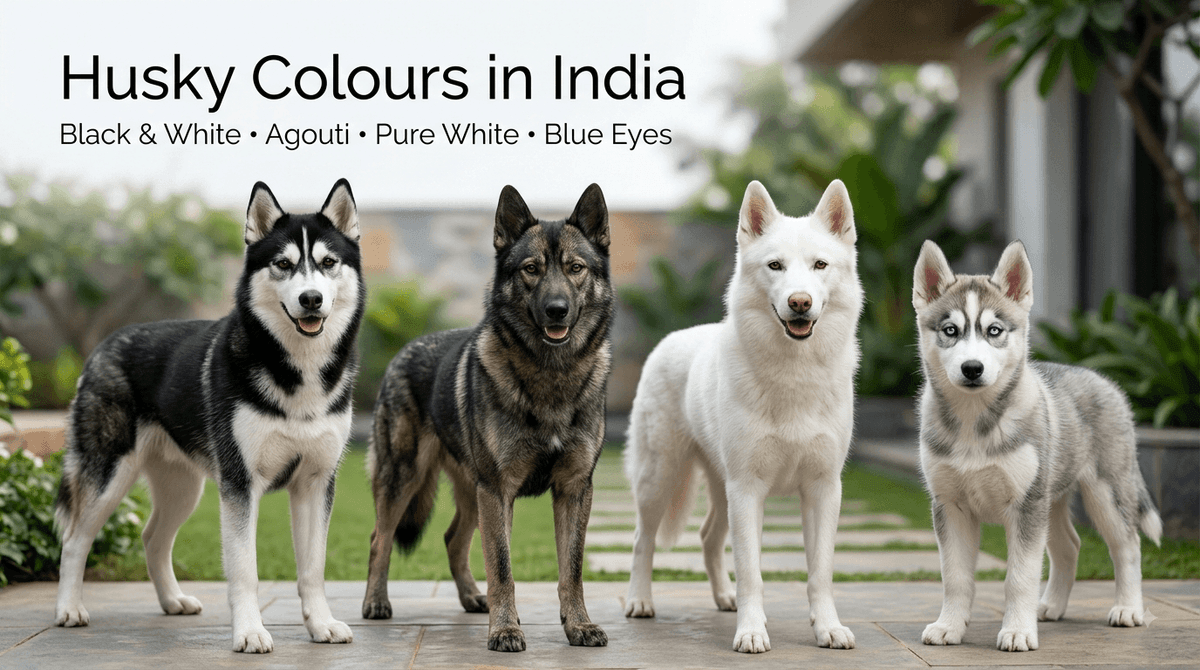
Siberian Husky Colours in India: Black & White, Agouti, White & Blue Eyes Explained
Explore Siberian Husky colours in India — black & white, agouti, pure white, and blue eyes explained. Learn what actually matters before buying.
Frequently Asked Questions
Provide a cool indoor room, water, shade and carefully timed walks. Reduce intense activity and maintain a backup plan for power cuts.