
Foods Dogs Cannot Eat in India: Common Kitchen Foods to Avoid

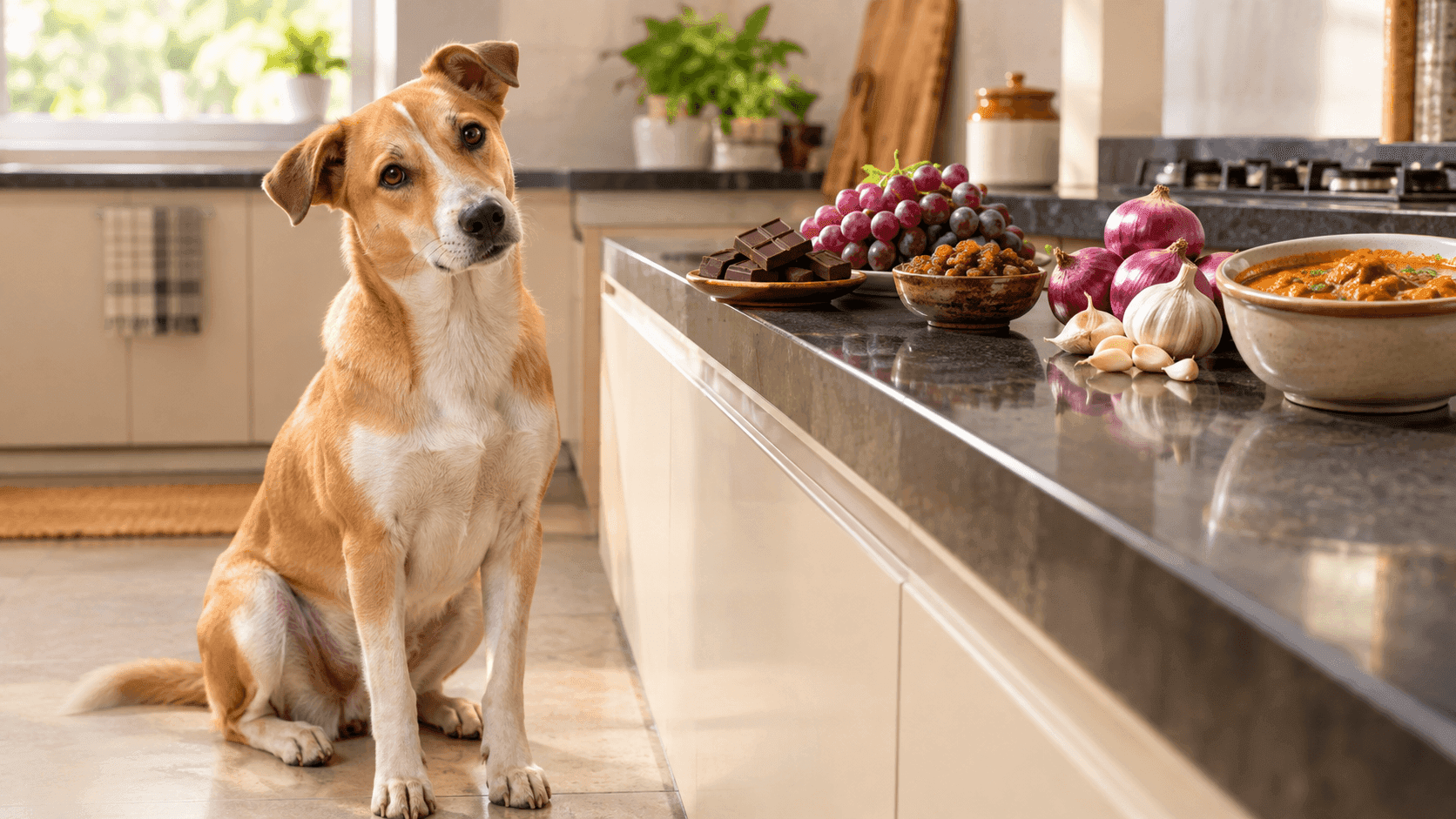
Dinner is on the table, the dal is steaming, and your puppy is sitting beside you with big, hopeful eyes. Sharing a bite feels harmless, but many everyday Indian foods can make dogs seriously ill.
The foods dogs cannot eat in India include onion, garlic, chocolate, grapes and raisins, tamarind (imli), xylitol-sweetened products, alcohol, caffeine (including chai and coffee), raw yeast dough and cooked bones. Some of these are toxic. Others are not poisonous but can cause stomach upset, pancreatitis or choking. How much harm a food does depends on the ingredient, the amount eaten, and your dog’s size and health.
Why Can’t Dogs Eat Everything Humans Eat?
Dogs break down certain compounds very differently from people. Theobromine in chocolate, compounds in onion and garlic, and tartaric acid in grapes and imli are handled slowly or poorly by a dog’s body. They build up and can damage the heart, nerves, red blood cells or kidneys.
It helps to sort risky foods into three groups:
| Type | What it means | Examples |
|---|---|---|
| Toxic foods | Can poison a dog even in small amounts | Chocolate, grapes, onion, garlic, xylitol, imli |
| Unsuitable foods | Not poisonous, but fat, salt or spice can cause illness | Pakoras, namkeen, rich gravies, mithai |
| Physical hazards | Cause choking, blockage or injury | Cooked bones, corn cobs, mango seeds |
Puppies and small breeds such as Shih Tzus and Pomeranians are at higher risk, because a small amount is a bigger dose for a small body. Cooking does not make a food safe: onion in a gravy is just as harmful as raw onion. “Homemade” or “natural” does not mean dog-safe either.
Dogs also need a complete diet made for dogs. Our Labrador puppy feeding schedule by age explains what a growing pup actually needs at each stage.
Foods That Are Toxic to Dogs
Here is a quick reference before the details on each food.
| Food | Main risk | Common exposure in Indian homes | When signs may appear |
|---|---|---|---|
| Chocolate and cocoa | Heart and nervous system | Chocolate mithai, cakes, cocoa powder | Usually 6–12 hours |
| Grapes and raisins | Kidney injury | Kishmish in kheer, halwa, pulao, dry fruit boxes | Within hours; kidney damage can follow later |
| Onion and garlic | Red blood cell damage (anaemia) | Curry, dal tadka, biryani, gravy | A few days |
| Xylitol | Low blood sugar, liver damage | Sugar-free gum, mints, some peanut butters | Can be within minutes |
| Alcohol | Poisoning, collapse | Spilled drinks, rum cake | Quickly |
| Caffeine | Restlessness, racing heart | Chai, coffee, energy drinks | Within hours |
| Macadamia nuts | Weakness, tremors | Imported cookies, gift hampers | Within about 12 hours |
| Raw yeast dough | Bloating, alcohol poisoning | Pav, naan or bread dough left to rise | Within hours |
Chocolate and Cocoa
Chocolate contains theobromine and caffeine. Cocoa powder and baking chocolate are the most concentrated, dark chocolate comes next, and milk chocolate has less. The risk depends on the type of chocolate, how much was eaten and the dog’s weight. Even chocolate-coated mithai or a slice of cake can be a problem for a small puppy. If your dog eats chocolate, call your vet straight away and tell them the type and amount.
Grapes and Raisins
Grapes and raisins can cause sudden kidney injury in dogs, and no amount has been shown to be safe for every dog. In Indian homes, the most common exposure is kishmish hidden in kheer, sheera, pulao and festive dry fruit boxes. Contact a vet immediately, even if your dog looks completely fine.
Onion, Garlic and Other Allium Foods
Onion, garlic, leeks, chives and spring onion damage red blood cells and can lead to anaemia. Raw, cooked, fried and powdered forms are all harmful, and garlic is more potent than onion.
This matters a great deal in India, where almost every curry, dal and gravy starts with an onion-garlic tadka. Weakness, pale gums and dark urine can take a few days to appear, so do not wait for them. Japanese breeds such as Akitas and Shiba Inus are reported to be more sensitive.
Xylitol-Containing Products
Xylitol is a sweetener found in sugar-free gum, mints, some peanut butters, toothpaste and chewable vitamins. In dogs it can cause a rapid drop in blood sugar, seizures and liver damage. Always check the label before sharing peanut butter, and treat any xylitol ingestion as an emergency.
Alcohol
Alcoholic drinks and alcohol-soaked desserts such as rum cake can cause vomiting, loss of coordination, breathing trouble, tremors and collapse. Alcohol is absorbed quickly, so get veterinary help fast.
Caffeine
Coffee, tea leaves, energy drinks and caffeine tablets contain the same kind of stimulants as chocolate. Never share your chai or coffee. Keep used tea leaves and coffee grounds in a bin your dog cannot open.
Macadamia Nuts
Macadamia nuts are not common in Indian kitchens, but they turn up in imported cookies and gift hampers. They can cause vomiting, weakness and wobbliness, so call your vet if your dog eats any.
Raw Yeast Dough
Raw dough made with yeast, such as pav, naan, pizza or bread dough, keeps rising in the warm stomach and causes painful bloating. As the yeast ferments, it also produces alcohol. Keep any dough that is left to rise well out of reach.
Everyday Indian Foods That May Be Unsafe for Dogs
Most Indian dishes are not poisonous in themselves. The ingredients and the way they are cooked are what cause problems.
| Indian food | Why it is a problem | Toxic or unsuitable? |
|---|---|---|
| Curry, dal tadka, biryani, pulao | Onion and garlic | Toxic |
| Imli chutney, tamarind-heavy sambar or rasam | Tamarind contains tartaric acid, linked to kidney injury | Toxic |
| Kheer, halwa, ladoo with kishmish | Raisins | Toxic |
| Chocolate or sugar-free mithai | Chocolate or xylitol | Toxic |
| Namkeen, bhujia, chips, pickles | Very high salt | Unsuitable; large amounts can poison |
| Pakoras, puris, samosas | Deep-fried and high in fat | Unsuitable; pancreatitis risk |
| Butter chicken, malai and rich gravies | Fat and cream, plus onion and spices | Unsuitable, often toxic |
| Leftover masala mixes | Concentrated spices, onion and garlic powder | Toxic or irritating |
Spicy food irritates a dog’s stomach and gut. Oily, rich meals can cause vomiting and diarrhoea, and in some dogs they can lead to pancreatitis, which is painful and can be serious.
Tamarind is the risk most Indian owners miss, because it is not on most Western lists of toxic foods. The simple rule is this: if you do not know every ingredient in a dish, do not share it.
Foods That Can Harm Dogs Without Being Toxic
Some foods cause physical injury rather than poisoning, and these are some of the most common reasons dogs end up at the vet after a family meal.
| Food | Risk |
|---|---|
| Cooked chicken, mutton or fish bones | Splinter; can cut the mouth, block the gut or cause internal bleeding |
| Large or very hard bones | Cracked teeth; can get stuck in the gut |
| Corn cobs (bhutta) | Intestinal blockage |
| Mango seeds (guthli) and fruit pits | Choking and blockage |
| Large chunks of food | Choking, especially in greedy eaters |
| Very hard chews | Fractured teeth |
Most of these exposures come from the bin, not the plate. A covered bin and quickly clearing leftovers after meals prevent a lot of emergency visits.
Are Common Indian Staple Foods Safe for Dogs?
Not every home food is off-limits. Some plain staples are fine in small amounts, as long as they are prepared without risky ingredients.
| Food | General safety | Important precaution |
|---|---|---|
| Plain cooked rice | Generally fine in small amounts for many dogs | No masala, ghee or tadka |
| Plain roti | Not toxic to most dogs | Small pieces only; no ghee, onion, garlic or stuffing |
| Plain cooked dal | Depends on preparation | Only without tadka, onion, garlic or excess salt |
| Plain curd | Some dogs tolerate a little | Lactose and added sugar can upset digestion |
| Milk | Not toxic, but many dogs cannot digest it | Often causes diarrhoea |
| Plain boiled egg | Generally safe when fully cooked | No salt or masala; watch portion size |
| Plain boiled chicken | Generally fine if boneless and unseasoned | Never feed cooked bones |
| Banana | Generally safe in small portions | A treat, not a meal |
“Generally safe” does not mean complete nutrition, and table food should only ever be a small part of your dog’s diet. For more treat ideas, see our list of healthy and safe foods you can feed your dog.
If you are weighing home-cooked meals against packaged food, our guide on desi diet vs kibble explains how to keep a homemade diet balanced. Dogs with allergies, a sensitive stomach or a medical condition need a diet plan from their vet.
Warning Signs Your Dog May Have Eaten Something Harmful
Signs differ depending on what was eaten. Some toxins act within minutes, while others, such as onion and grapes, can take a day or more to show anything.
| What you may notice | What it can point to |
|---|---|
| Vomiting, diarrhoea, drooling | Most toxic or rich foods |
| Restlessness, panting, racing heart | Chocolate, caffeine |
| Weakness, wobbling, trembling | Xylitol, macadamia nuts, alcohol |
| Pale gums, dark urine, fast breathing | Onion, garlic |
| Drinking and urinating more than usual | Salt, grapes, raisins, imli |
| Swollen belly, repeated retching | Raw dough, bones, corn cobs |
| Seizures or collapse | Emergency: go to a vet immediately |
What Should You Do If Your Dog Eats Toxic Food?
Act quickly and calmly. Follow these steps:
| Step | What to do |
|---|---|
| 1 | Remove any remaining food from your dog’s reach |
| 2 | Note what was eaten, roughly how much, and when |
| 3 | Keep the packet or ingredient label |
| 4 | Call your vet or the nearest 24-hour emergency clinic straight away |
| 5 | Follow their instructions and watch your dog as advised |
| 6 | Go to the clinic immediately if severe signs appear |
Do not wait for symptoms after chocolate, grapes or raisins, xylitol, onion, garlic or imli. A dog that looks normal now can still be in danger.
Do not make your dog vomit, and do not give salt, milk, oil, haldi or any home remedy unless a vet tells you to. Some of these cause more harm, and vomiting is not safe in every situation.
How to Keep Your Kitchen Dog-Safe
Prevention is much easier than treatment. A few house rules cover most risks:
| Habit | Why it helps |
|---|---|
| Store chocolate, dry fruits, sugar-free products and masalas in closed cabinets | Keeps the most toxic foods out of reach |
| Use a bin with a lid | Bones, corn cobs and leftovers are what dogs steal most |
| No feeding from the plate, for everyone | Kids and visiting relatives are the most common source of risky treats |
| Keep dogs out of the kitchen during festivals and parties | Sweets with kishmish and chocolate are everywhere |
| Keep dog treats handy | Makes saying no easy |
If you are bringing a new puppy home, our guide on how to prepare your home for a new puppy covers puppy-proofing the kitchen and the rest of the house. If you are still choosing your pup, see how to buy a puppy on GoodFurs to find a healthy, vet-checked puppy from a verified breeder.
Most read





Frequently Asked Questions
Dogs should never eat onion, garlic, chocolate, grapes, raisins, tamarind, alcohol, caffeine, raw yeast dough, xylitol-sweetened products or cooked bones. Many Indian curries, dals and sweets contain these ingredients, so avoid sharing home-cooked dishes.