How to Toilet Train a Puppy in an Indian Apartment: Step-by-Step Guide

Quick answer: To toilet train a puppy in an apartment, take it to one fixed toilet spot every 2–3 hours, and always after waking, meals, play and before bed. Reward it within seconds, clean accidents with an enzyme cleaner, and never punish. Most puppies learn the basics in 4–6 weeks, with full reliability by around 6 months.
Day 1: The First Puddle
This is an example story, but if you’ve brought a puppy home to a flat, it will sound familiar.
The Sharmas live on the 9th floor of a Greater Noida society. On a Sunday afternoon, they brought home Bruno, a 2-month-old Golden Retriever puppy. Within an hour, there was a puddle on the living room tiles. By evening, there were three.
Neha, the mother, wondered if they had made a mistake. Her son wanted to scold Bruno. Her husband was already searching “how to toilet train a puppy” on his phone.
What they learned over the next month is what this guide shares with you.
Lesson 1: Bruno Wasn’t Being Naughty
The first thing their vet told them was simple. A puppy’s bladder is tiny. A common guideline is that a puppy can hold urine for about one hour per month of age. So 2-month-old Bruno needed a toilet break roughly every 2 hours.
The accidents weren’t bad behaviour. Bruno just couldn’t wait yet. Once the family understood this, their frustration turned into planning. If you’re bringing a puppy home soon, our first week with a new puppy guide helps you prepare.
Lesson 2: A Fixed Routine Changed Everything
The Sharmas made a schedule and stuck it on the fridge. Bruno ate at the same times every day, and someone took him to his toilet spot on time, every time. They used one cue word, “toilet,” said calmly while he sniffed.
Here’s the toilet routine that worked for them:
| When | Why it matters |
|---|---|
| Right after waking up | The bladder is full after sleep |
| 10–15 minutes after meals | Eating triggers the urge to go |
| After playtime | Activity speeds up digestion |
| After drinking lots of water | Common in hot Indian summers |
| Before bedtime | Fewer night-time accidents |
| Every 2–3 hours in between | Prevents surprise puddles |
For the first few weeks, Bruno also needed one quiet toilet trip at night. No play, no lights, just back to bed. Fixed meal times made the routine easier, and our puppy feeding guide explains how much and how often to feed by age.
Lesson 3: Picking the Right Spot in a Flat
The Sharmas had no garden. Their vet also advised keeping Bruno off the society lawns and streets until his vaccinations were complete, since unvaccinated puppies are at risk from diseases like parvovirus. Our puppy vaccination schedule explains when outdoor walks are safe.
So they compared apartment-friendly options:
| Option | Pros | Things to watch |
|---|---|---|
| Training pads | Easy, absorbent, good for small flats | Ongoing cost; puppies may chew them |
| Balcony potty tray (artificial grass) | Reusable, keeps mess outside | Rinse daily; shade in summer, cover in monsoon |
| Washable pads | Cheaper over time, eco-friendly | Daily washing and drying |
| Outdoor walks | Best long-term habit | Only after your vet’s go-ahead |
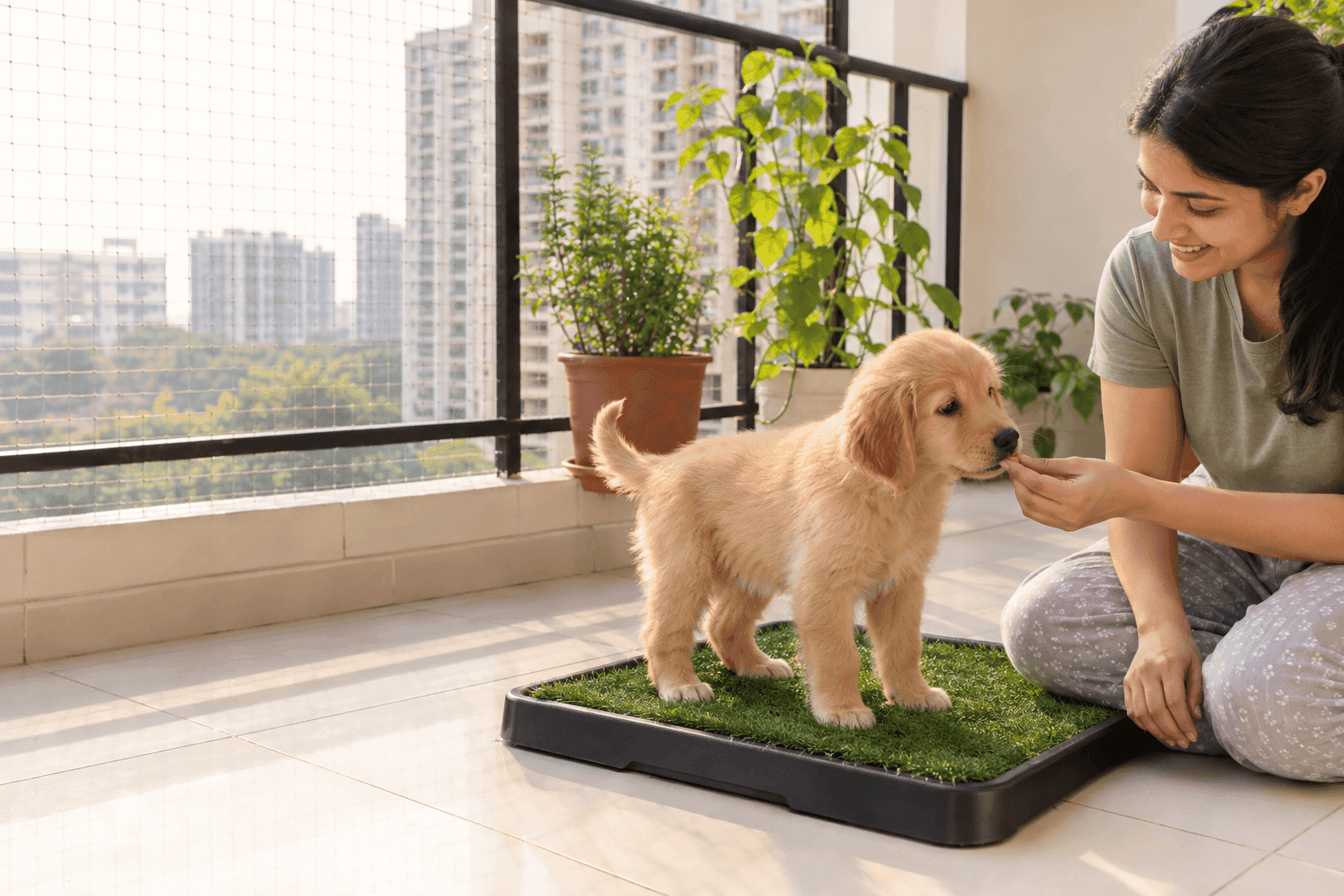
They started with pads near the balcony door, then moved to a grass tray on the balcony. The balcony already had safety netting, and they never left Bruno out there alone. They also kept the toilet spot away from his food bowl and bed, because dogs avoid soiling where they eat and sleep.
Lesson 4: Treats, Not Scolding
In week one, Bruno peed on the carpet while everyone watched. Neha’s son reached for a newspaper. Neha stopped him.
Punishing a puppy doesn’t teach it where to go. It teaches fear. Puppies who are scolded often start hiding to pee, under beds or behind sofas, which makes training harder.
Instead, the family calmly said “oops,” carried Bruno to his spot, and praised him when he finished there. Every time Bruno went in the right place, he got a small treat within 2–3 seconds. Late rewards confuse puppies, so timing mattered.
They also learned his signals: sniffing the floor, circling, whining or walking towards a corner. When they saw these, they guided him to the spot right away. When no one could watch him, Bruno stayed in a small playpen with a pad.
Lesson 5: Cleaning Up Properly
The family’s first instinct was phenyl. It smelled clean to them, but Bruno kept going back to the same corner. Dogs can still smell urine that humans can’t.
What worked better:
- Blot urine with paper towels first.
- Clean with an enzyme-based pet cleaner, which breaks down the odour.
- Avoid ammonia-based cleaners, as their smell is similar to urine.
- Keep the puppy away until the floor is dry.
Lesson 6: The Mistakes They Nearly Made
| Mistake | What worked instead |
|---|---|
| Moving the toilet spot often | One fixed spot |
| Giving full house access too soon | Opening up one room at a time |
| Irregular meal times | A fixed feeding schedule |
| Rewarding late | Treats within seconds |
| Expecting results in a week | Planning for weeks, not days |
Week 6: Small Wins
By week 6, Bruno was walking to his balcony tray on his own most days. He still had the odd accident, especially when he was excited or teething. By the time his vaccinations were done, he moved to outdoor walks easily.
Every puppy is different. Some learn faster, some slower, and smaller breeds can take longer. If your puppy suddenly has many accidents after doing well, or strains while peeing, see your vet. It could be a urinary infection, not a training problem.
Thinking about which dog suits flat life? Our best dog breeds for apartments in India guide can help, and you can see Golden Retriever puppies on GoodFurs if a family dog like Bruno appeals to you.
Most read




Related Blogs
Puppy Crying at Night: Causes, Sleeping Routine and What Owners Can Do
Puppy crying at night? Learn why new puppies cry, a simple sleeping routine for Indian homes, first-night tips, and when night-time crying needs a vet.
How to Socialise a Puppy: A Week-by-Week Guide for the First 3 Months
Learn how to socialise a puppy safely, week by week, for the first 3 months. Timeline, checklist, pre-vaccination tips and Indian home examples for new owners.
How to Buy a Dog Online in India: Step-by-Step Guide 2026
Learn how to buy a dog online in India safely. Check breed, health, vaccination, KCI documents, pricing and puppy delivery before buying.
Frequently Asked Questions
Most puppies learn the basics in 4–6 weeks with a steady routine. Full reliability usually comes by around 6 months of age, though smaller breeds may take longer.